The traditional 60/40 portfolio has been under attack for years, and the recent hot trades in precious metals and cryptocurrencies are leading it to lose a little more of its prominence. Multiple strategists and investors are pivoting toward a 60/20/20 market portfolio: with the 60% in stocks unchanged, but fixed income losing half of its former hold over investor money, and 20% carved out for alternatives like gold
Stocks and bonds are moving in the same direction too often, they say, while inflation, geopolitical risk, and government spending and high debt loads mean bonds no longer offer the protection they once did. “We are seeing greater adoption of non-equity, non fixed-income products,” Todd Rosenbluth, head of research at VettaFi, told CNBC.
In this new approach to structuring market exposure, gold is not a hedge on the margins of a portfolio, but one of its core holdings. Gold recently reached a record high above $4,300. Gold is up over 60% since the beginning of the year, which is backed by central bank demand, de-dollarization, and geopolitical tensions, and what has been called “the debasement trade.”
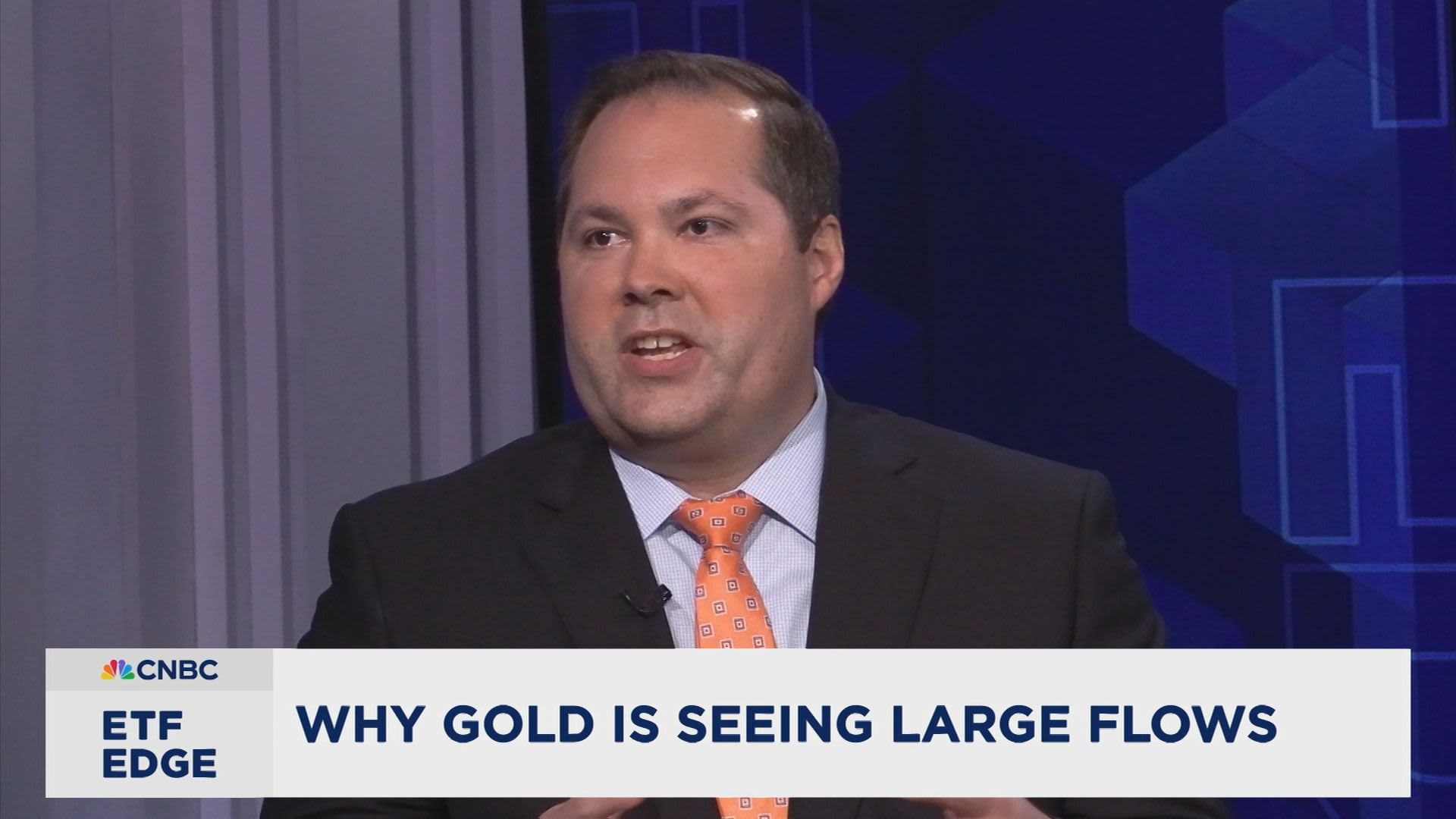
“What’s really happening now is a shift into the acceptance of gold,” Steve Schoffstall, director of ETF product management at precious metals and critical materials investing company Sprott, said on CNBC’s “ETF Edge” earlier this week. Typically, he said, it’s been viewed as a “fringe” allocation tool, “but what we’re really staring to see now is more prominent economists suggest shifting from 60-40 to something closer to 60-20-20,” he added.




But Schoffstall also said that for “most people, we feel they are probably well positioned if they have a 5%-15% allocation to physical gold.”
Gold ETFs have skyrocketed in performance and investor appeal, with the SPDR Gold Shares (GLD) and iShares Gold Trust (IAU) up around 11% this month, but the flood of investor assets into gold funds extends back to earlier this year. Gold ETFs posted their largest monthly inflows ever in September, according to the World Gold Council, with close to $11 billion in the month. SPDR Gold Shares took in over $4 billion alone last month, and mid-October, has amassed another $1.3 billion from investors, according to ETFAction.com. Sprott says the total assets moved by investors into gold funds this year has surpassed $38 billion.

Performance of the SPDR Gold Shares ETF and iShares Bitcoin Trust in 2025.
Some investors are allocating to cryptocurrency, specifically bitcoin, with a similar 20% approach. Some financial advisors have gone beyond even that level, saying up to 40% in cryptocurrency is defensible as an investing approach.
Bitcoin reached a record high of $126,000 on Oct. 6 and has seen a flood of new money this month, with iShares Bitcoin Trust ETF (IBIT) taking in close to $1 billion in a single day, and over $4 billion at the mid-month October mark.
Rosenbluth said the alternatives bucket is no longer a single bet, but a mix of commodities, crypto, and private credit that are all packaged in ETFs, but investors do need to understand the bets have significant differences. “Gold is more risk off … cryptocurrency is more risk on,” Rosenbluth said.
Silver has also gained more attention among investors, and unlike gold, silver is a play on multiple global economic trends, including industrial demand, electrification, and automation. Prices recently climbed to a record high of $53.59 per ounce and some analysts expect it to trend much higher. “Silver is very vast in its uses about 10,000 uses,” Schoffstall said.
Rosenbluth warns amid the current record run for precious metals and crypto that this should not be about investors chasing the highest return in the short-term. While this has been a period of time when these alternatives increased overall portfolio returns, there’s no guarantee that will always be the case. The primary reason to restructure a portfolio with hedges, Rosenbluth said, is to add levers that operate differently during periods of ups and downs in the stock and bond markets, and that can help to smooth out returns over time.
This week was a good example of how these assets, considered popular hedges, can have very different market dynamics. After hitting its record above $126,000 earlier this month, bitcoin has sold off sharply, with a weekly loss of over 8%, as of Friday morning, while gold and silver have continued to move up and remain on pace for weekly gains. Private credit, meanwhile, which has ballooned in recent years but also sparked fears it might be brewing a bubble, became a major concern of the market over the past week since the surprise bankruptcy of auto parts company First Brands.