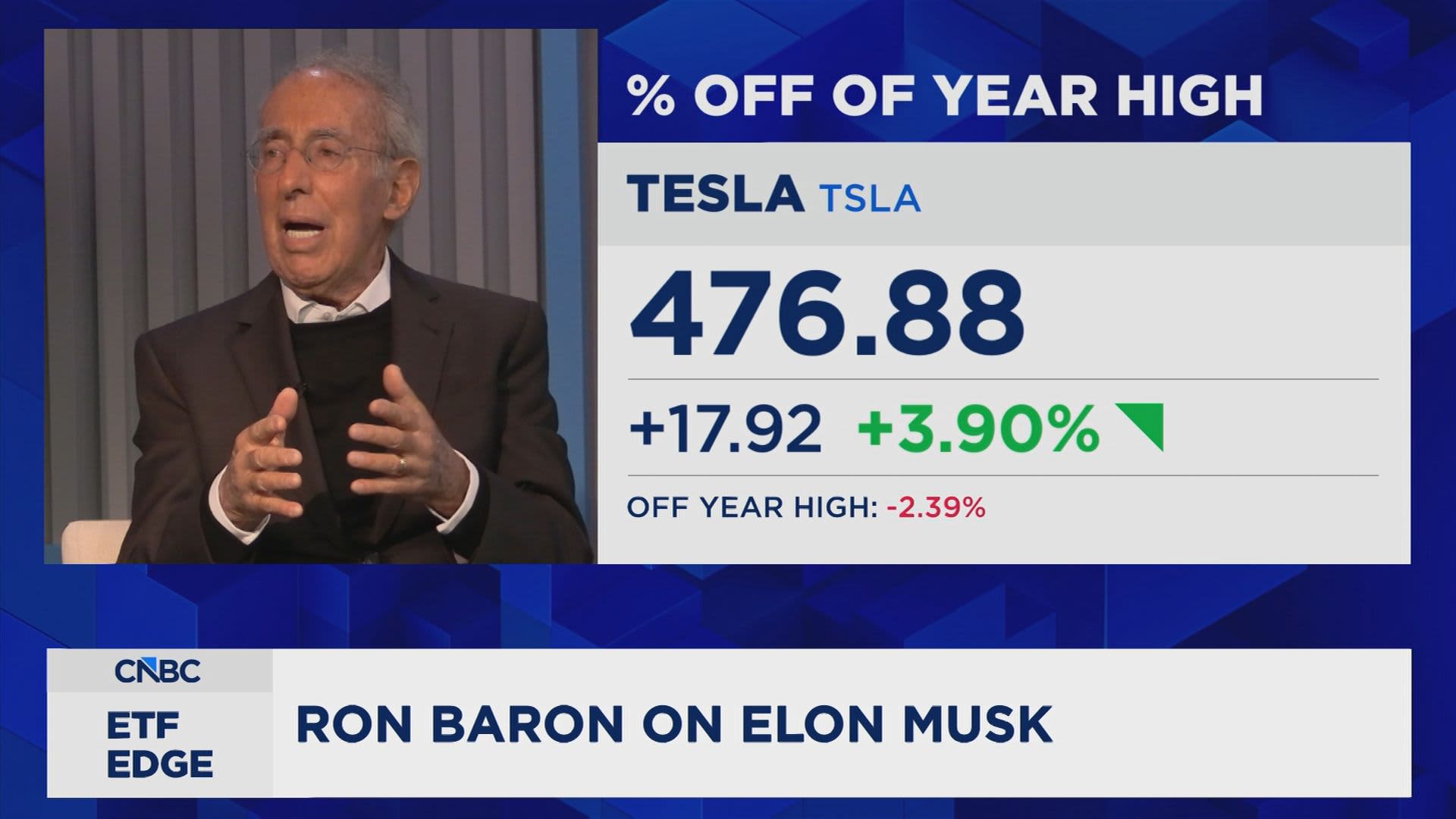
A shopper walks past shelves of cooking oil for sale at a supermarket in Beijing on October 15, 2025.
Pedro Pardo | Afp | Getty Images
President Donald Trump‘s tariffs will cost global businesses upward of $1.2 trillion in 2025, with most of the cost being passed onto consumers, according to a new analysis from S&P Global.
In a white paper released Thursday, the firm said its estimate of additional expenses for companies is probably conservative. The price tag comes from information provided by some 15,000 sell-side analysts across 9,000 companies who contribute to S&P and its proprietary research indexes.
“The sources of this trillion-dollar squeeze are broad. Tariffs and trade barriers act as taxes on supply chains and divert cash to governments; logistics delays and freight costs compound the effect,” author Daniel Sandberg said in the report. “Collectively, these forces represent a systemic transfer of wealth from corporate profits to workers, suppliers, governments, and infrastructure investors.”
Trump in April slapped 10% tariffs on all goods entering the U.S. and listed individual “reciprocal” tariffs for dozens of other countries. Since then, the White House has entered a series of negotiations and agreements while also adding duties on a variety of individual items such as kitchen cabinets, autos and timber.
While administration officials have insisted that exporters will be forced to bear the greater share of the levies, the S&P analysis suggests that is only partly true.
In fact, the firm says that just one-third will be borne by companies, with the rest falling on the shoulders of consumers, under conservative estimates. The figures incorporated a $907 billion hit to covered companies with the remainder to uncovered firms as well as private equity and venture capital.
“With real output declining, consumers are paying more for less, suggesting that this two-thirds share represents a lower bound on their true burden,” said Sandberg, who wrote the report along with Drew Bowers, a senior quantitative analyst at S&P Global.
Political and policy stakes
The size of the tariff hit and the burden of the costs are critical both for the White House looking to sell the duties as essential to restoring a fair trade balance, and to policymakers at the Federal Reserve looking to calibrate the proper balance for monetary policy.
“The President and Administration’s position has always been clear: while Americans may face a transition period from tariffs upending a broken status quo that has put America Last, the cost of tariffs will ultimately be borne by foreign exporters,” White House spokesman Kush Desai said in a statement.
“Companies are already shifting and diversifying their supply chains in response to tariffs, including by onshoring production to the United States,” he added.
Fed officials have been inclined to look through the duties as a one-time hit to prices and not a source of underlying inflationary pressures. The S&P researchers found similar sentiment among analysts.
The consensus looks for a 64 basis point contraction in profit margins this year, fading to 28 basis points for 2026 and then 8 to 10 basis points in 2027-28. A basis point equals 0.01%.
“In effect, 2025 locked in the hit; 2026 and 2027 will test whether the market’s optimism about re-equilibration is warranted,” the authors wrote. “For now, consensus envisions a world where margins eventually recover to pre-tariff trajectories. Whether that faith proves justified will depend on how firms adapt through technology, cost discipline and reshaped global value chains that have defined this cycle.”
The impact also likely will depend on how Trump’s tariff strategy evolves. The White House currently is back in heightened tensions with China over a rare earth dispute and Trump’s intentions to retaliate.
The S&P paper found that Trump’s removal in May of the “de minimis” exception for goods under $800 was “the real inflection point” for how hard tariffs would bite. The exception had allowed low-priced goods to sail under previous tariff barriers, but “had become politically untenable.”
“When the exemption closed, the shock rippled through shipping data, earnings reports, and executive commentary,” Sandberg said.
“In the optimistic scenario that this turbulence is temporary, the Trump administration’s tariff agenda and the resulting supply chain realignments are viewed as transitory frictions, not permanent structural taxes on profitability,” he added.