Skip to content
Trending
June 3, 2025Euro zone inflation falls to cooler-than-expected 1.9% in May, below ECB target October 31, 2025Linde stock slips despite an earnings beat — why we’re maintaining our rating March 10, 2025Broadcom shares soar 16% as earnings top estimates on demand for custom AI chips July 20, 2025Netflix posts earnings beat as revenue grows 16% in second quarter February 15, 2025Here’s a potential winner from the Trump tariffs: American tourists traveling abroad May 10, 2025Billionaire Ken Griffin calls tariffs a ‘painfully regressive tax,’ hitting working class Americans the hardest April 17, 2025Trump again calls for Fed to cut rates, says Powell’s ‘termination cannot come fast enough’ May 18, 2025Boeing would avoid guilty plea, prosecution over 737 Max crashes in possible DOJ deal April 23, 2025Boeing to seek FAA approval to increase 737 Max production as losses narrow June 10, 2025Bulgaria is set to join the euro zone. But its citizens aren’t convinced
  Monday 8 December 2025
everydayread.net
  • HOME
  • Bitcoin
  • Business
  • Earnings
  • Economy
  • Finance
everydayread.net
everydayread.net
  • HOME
  • Bitcoin
  • Business
  • Earnings
  • Economy
  • Finance
everydayread.net
  Finance  Stock volatility poses an ‘opportunity,’ investment analyst says. Here’s why
Finance

Stock volatility poses an ‘opportunity,’ investment analyst says. Here’s why

AdminAdmin—March 22, 20250

Traders work on the floor of the New York Stock Exchange (NYSE) in New York City. 

Spencer Platt | Getty Images

Stock market corrections are common

First, there is some consolation for investors. Though they may feel painful, stock market corrections are fairly common.

There have been 27 market corrections since November 1974, including last week’s market move, according to Mark Riepe, head of the Schwab Center for Financial Research. That amounts to roughly one every two years or so, on average.

Most of them haven’t cascaded into something more sinister. Just six of those corrections became “bear markets” (in 1980, 1987, 2000, 2007, 2020 and 2022), according to Riepe. A bear market is a downturn of 20% or more.

Pullbacks can be ‘an incredible opportunity’

More stories

Fed’s Miran says stablecoin surge could help push interest rates lower

November 7, 2025

JPMorgan Chase unveils new Sapphire Reserve card perks and $795 annual fee

June 17, 2025

Goolsbee says Fed now has to wait longer before moving rates because of trade policy uncertainty

May 24, 2025

The record-breaking run of ‘Ne Zha 2’ may seem like a surprise. It shouldn’t

February 26, 2025

Investors often engage in catastrophic thinking when there’s a market pullback, believing the market may never recover and that they’ll lose all their hard-earned money, said Brad Klontz, a certified financial planner and behavioral finance expert.

In reality, pullbacks are a less-risky time to invest, relative to when stocks are hitting all-time highs and feel more “exciting,” said Klontz, managing principal of YMW Advisors in Boulder, Colorado, and a member of CNBC’s Advisor Council.
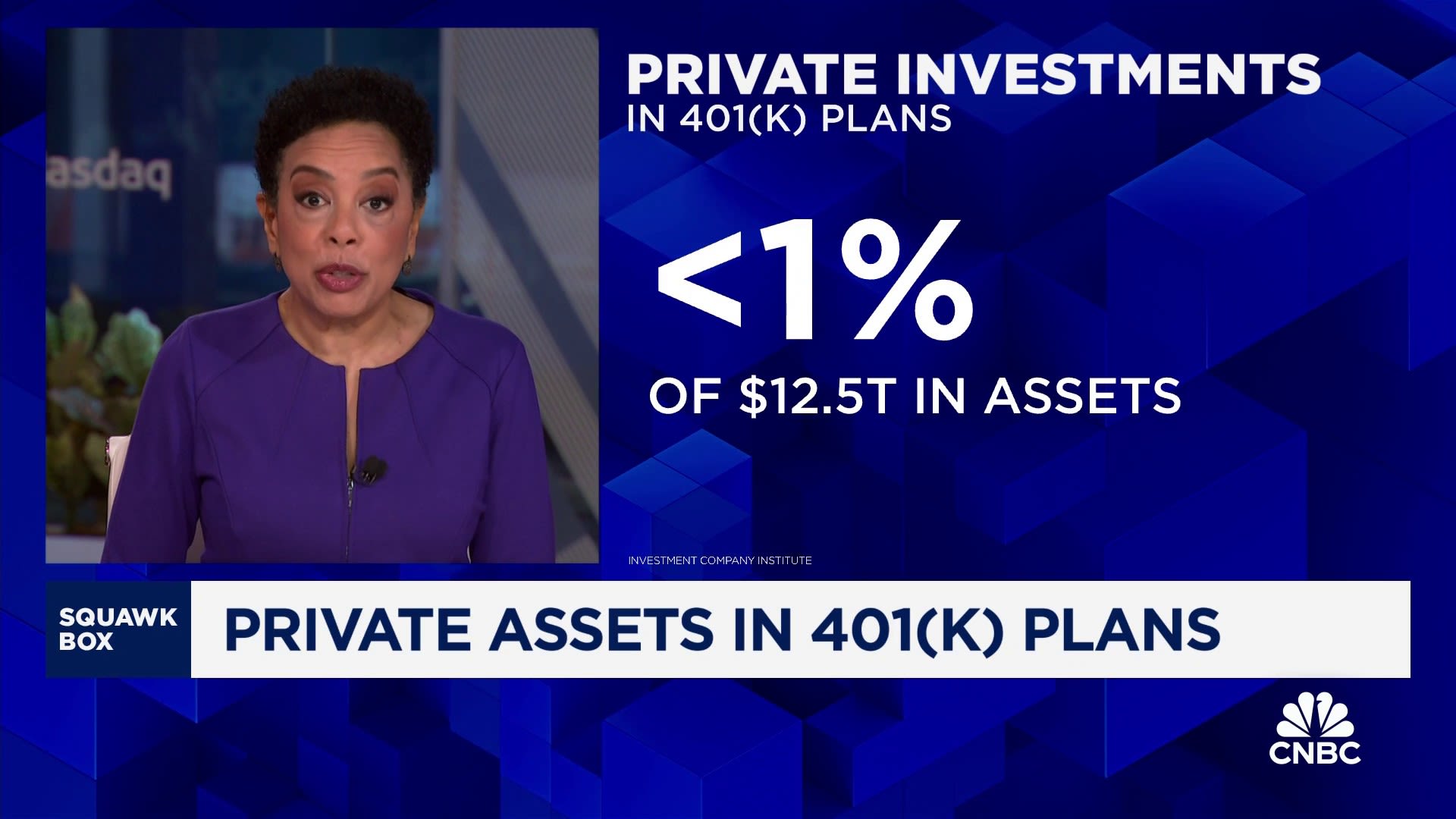
Private assets in 401(k) plans: Here's what to know

Investors are also buying stocks at a discount, known as “buying the dip.”

“It’s an incredible opportunity for you to be putting more money in,” Klontz said.

This is especially the case for young investors, who have decades for stock prices to recover and grow, Klontz said.  

Investors in workplace plans like 401(k) plans unconsciously take advantage of stock selloffs via dollar-cost averaging. A piece of their paycheck goes into the market every pay cycle, regardless of what’s happening in the market, Klontz said.

Be mindful of stock/bond allocations

However, investors should think carefully before going on a stock-buying spree, said Christine Benz, director of personal finance and retirement planning for Morningstar.

They should generally avoid diverging from their stock/bond allocations calibrated in a well-laid financial plan, she said.  

Of course, certain investors with cash on the sidelines may be able to take advantage of selloffs by investing in undervalued stocks, Benz said. U.S. large-cap stocks, for example, were selling at a roughly 5% discount relative to their fair market value as of Wednesday, according to Morningstar.

“I would let the asset-allocation target lead the way in determining whether that’s an appropriate strategy,” Benz said.

Chicago Fed President Goolsbee sees rate cuts depending on inflation progress
Take a look inside French luxury retailer Printemps’ first U.S. store
Related posts
  • Related posts
  • More from author
Finance

$208 million wiped out: Yieldstreet investors rack up more losses as firm rebrands to Willow Wealth

December 7, 20250
Finance

London’s answer to Wall Street gains momentum as major firms sign on

December 6, 20250
Finance

Is bitcoin really digital gold? In 2025, the leading crypto has failed to answer that question

December 5, 20250
Load more
Read also
Finance

$208 million wiped out: Yieldstreet investors rack up more losses as firm rebrands to Willow Wealth

December 7, 20250
Economy

Bessent says U.S. will finish the year with 3% GDP growth, sees ‘very strong’ holiday season

December 7, 20250
Earnings

HPE CEO Neri pleased with quarter despite AI revenue delays as stock bounces from post-earnings dip

December 7, 20250
Business

David Ellison’s hunt for WBD made David Zaslav richer — and it may not be over

December 7, 20250
Finance

London’s answer to Wall Street gains momentum as major firms sign on

December 6, 20250
Economy

Ukraine, trade, pandas: What China’s Xi and France’s Macron discussed in Beijing

December 6, 20250
Load more
    © 2022, All Rights Reserved.
    • About Us
    • Advertise With Us
    • Contact Us
    • Disclaimer
    • Cookie Law
    • Privacy Policy
    • Terms & Conditions