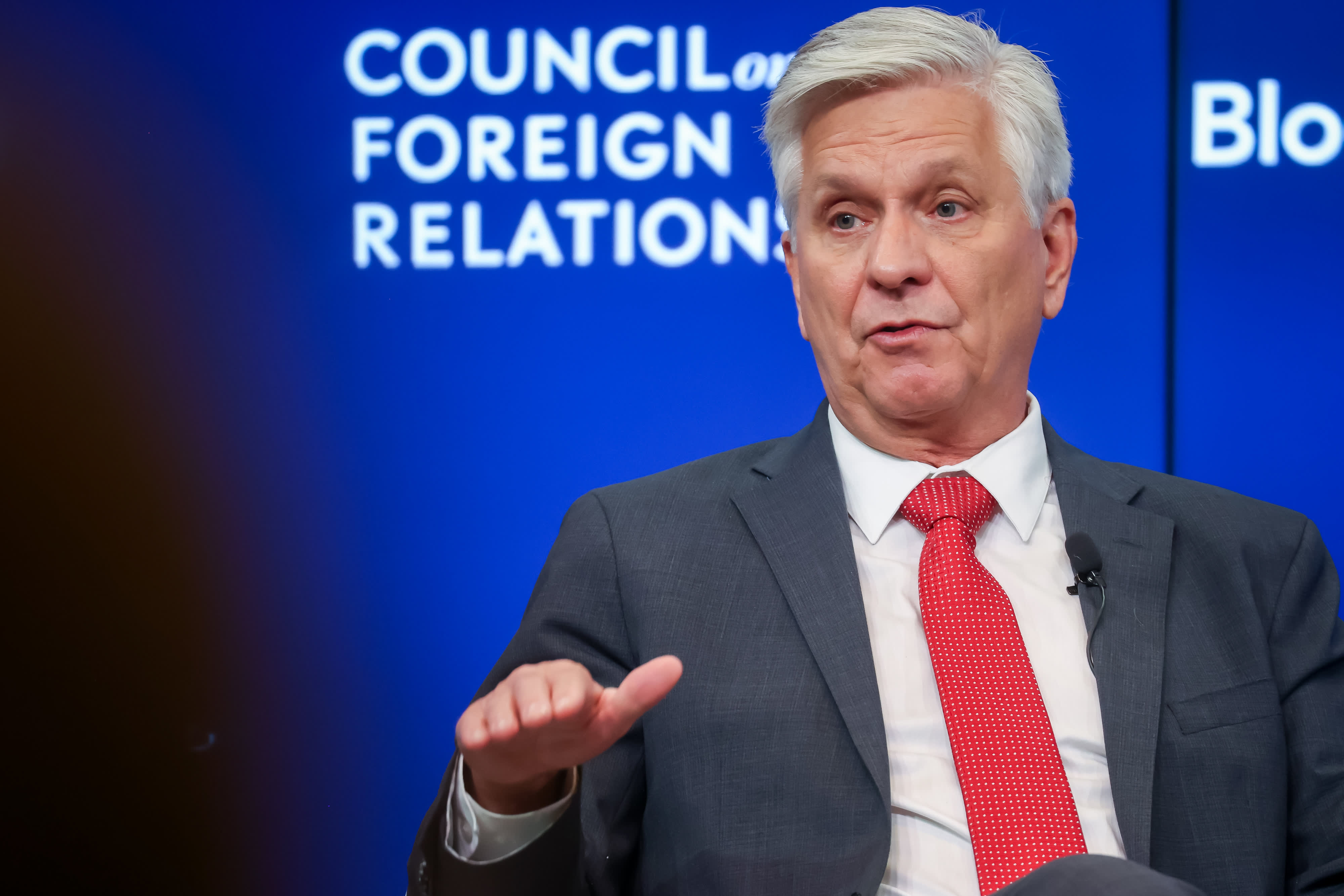
Shana Novak | Stone | Getty Images
President Donald Trump
Trump on Saturday announced he would impose a 25% tariff on nearly all goods shipped from Canada and Mexico and a 10% charge on imports from China, all of which were set to take effect on Tuesday. On Monday, both Mexico and Canada said the tariffs would be paused for about a month.
Still, the proposed import taxes come as the U.S. grapples with an unprecedented shortfall of crucial medicine ranging from injectable cancer therapies to generics, or cheaper versions of brand-name medicines, which has forced hospitals and patients to ration drugs. It also comes as many Americans struggle to afford the high costs of prescription medications.
The U.S. relies heavily on other countries for pharmaceutical products, especially for generic drugs. Those medications make up 90% of Americans’ prescriptions, so tariffs could potentially threaten many patients’ access to affordable treatments.
China in particular is a large supplier of active pharmaceutical ingredients, or APIs, for both brand-name and generic drugs due to lower manufacturing costs in the country. APIs are the main component of a drug that causes the desired effect of the treatment. Some generic drugs are manufactured overseas entirely.
The tariffs could “increase already problematic drug shortages” by forcing generic manufacturers out of the market due to low profit margins, according to a statement from John Murphy, CEO of the Association for Accessible Medicines, which represents generic pharmaceutical companies.
“Generic manufacturers simply can’t absorb new costs,” Murphy said Sunday. “Our manufacturers sell at an extremely low price, sometimes at a loss, and are increasingly forced to exit markets where they are underwater.”
He urged the Trump administration to exempt generic products from tariffs, adding that the overall value of all generic sales in the U.S. has decreased by $6.4 billion in five years despite “growth in volume” and new generic drug launches.
The Healthcare Distribution Alliance, which represents 40 drug distributors, has also called for the Trump administration to reconsider including pharmaceutical products in tariffs. In a statement Sunday, the group said tariffs would strain the pharmaceutical supply chain and “could adversely affect American patients,” whether that is through increased medical product costs or manufacturers leaving the market.
The group said the tariffs will put additional pressure on an industry already in financial distress, noting that distributors operate on low profit margins of just 0.3%.
The U.S. will likely see “new and worsened shortages of important medications,” and those costs will be “passed down to payers and patients, including those in the Medicare and Medicaid programs,” the Healthcare Distribution Alliance said.
An estimate from The Budget Lab at Yale University said long-term prices of pharmaceutical products in the U.S. will be 1.1% higher after shifts in the supply chain.
Pharmaceutical Research and Manufacturers of America, which represents pharmaceutical companies, said in a statement that it shares Trump’s goal of ensuring the U.S. maintains its “global leadership in biopharmaceutical innovation and manufacturing.”
Trade measures should focus on “addressing unfair practices abroad and safeguarding our intellectual property,” the group added.
Medical devices
The U.S. also relies on overseas manufacturing for medical devices, with many key components and finished products being sourced from countries such as China, Mexico and India.
For example, Intuitive Surgical, which manufactures robotic surgical systems, disclosed in its annual report last week that a “significant majority” of the company’s instruments and accessories are manufactured in Mexicali, Mexico.
Tariffs on the country would “increase the costs of our products manufactured in Mexico and adversely impact our gross profit,” the company said.
AdvaMed, the largest medical device association globally, urged the Trump administration to exempt medical products from the tariffs. In a statement, the group said import taxes could lead to shortages of critical medical technologies, higher prices for patients and payers, and less investment in research and development.
The tariffs and associated costs essentially function as “an excise tax in practice,” AdvaMed said, noting that Trump provided a carve-out for much of the medical technology sector when he imposed tariffs on China during his first term.
Tariffs could also impact hospitals, which rely on imports for everyday supplies, such as gowns, gloves and syringes, along with bigger items such as X-ray equipment.
But the American Medical Manufacturers Association, which advocates for U.S. businesses that produce medical personal protective equipment, or PPE, supports the tariffs on China and increasing domestic production of those products.
In a statement Monday, the group said the tariffs recognize that China has “not changed its ways and continues to engage in anti-competitive and hazardous behavior that harms U.S. PPE and medical supply manufacturers and threatens our supply chains and national security.”