A sign in German that reads “part of the UBS group” in Basel on May 5, 2025.
Fabrice Coffrini | AFP | Getty Images
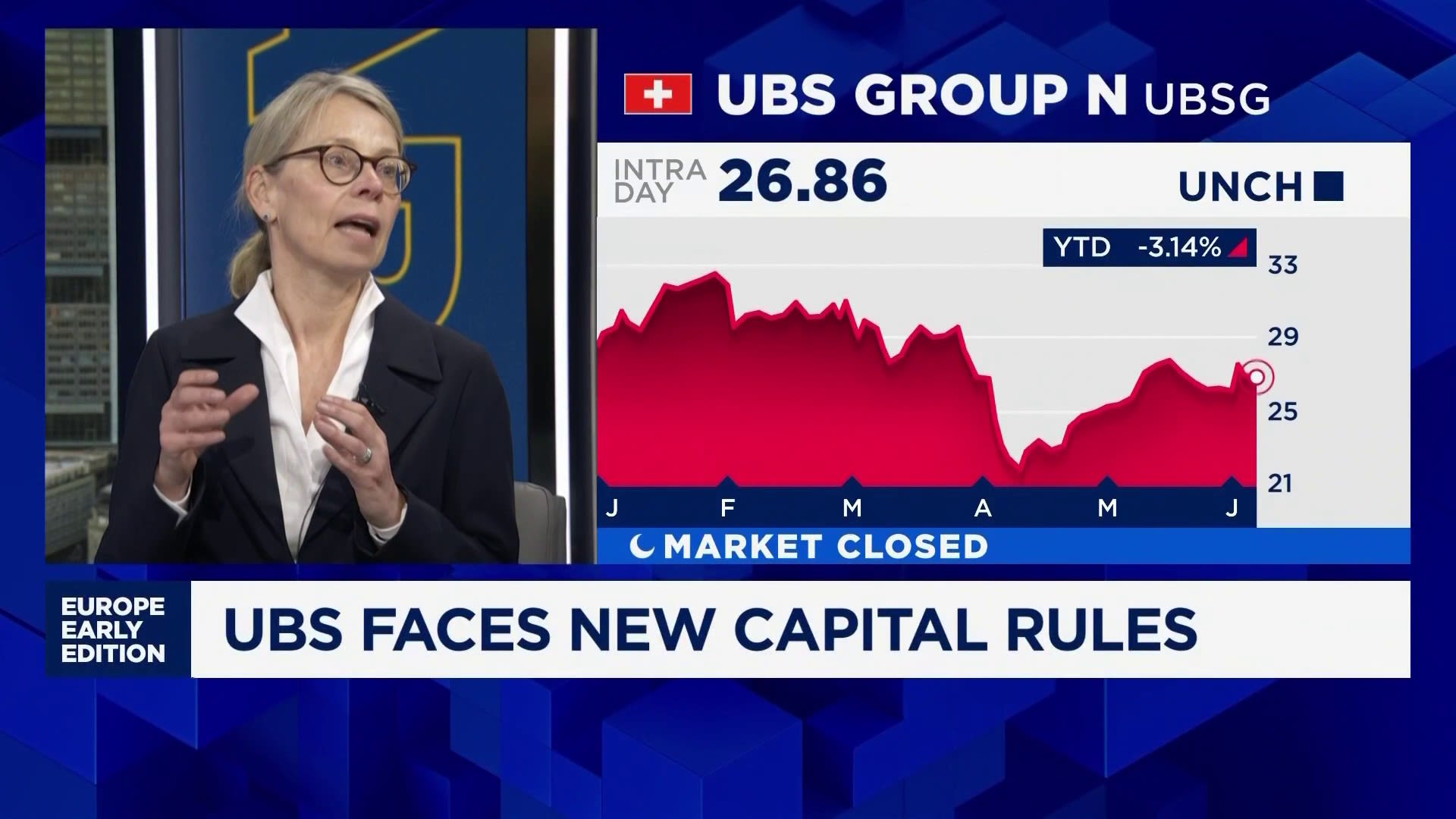
The Swiss government on Friday proposed strict new capital rules that would require banking giant UBS to hold an additional $26 billion in core capital, following its 2023 takeover of stricken rival Credit Suisse.
The measures would also mean that UBS will need to fully capitalize its foreign units and potentially carry out fewer share buybacks.
“The rise in the going-concern requirement needs to be met with up to USD 26 billion of CET1 capital, to allow the AT1 bond holdings to be reduced by around USD 8 billion,” the government said in a Friday statement, referring to UBS’ holding of Additional Tier 1 (AT1) bonds.
The measures therefore amount to an additional $26 billion in core capital but a requirement of just $18 billion in new capital. This is $2 billion lower than the $20 billion estimated by JP Morgan earlier this week.
UBS shares jumped 6% following the announcement and ended Friday’s trading session 3.8% higher.
The Swiss bank will become more stable and attractive in areas such as asset management, Swiss Finance Minister Karin Keller-Sutter said during a press briefing on Friday. “I don’t believe that the competitiveness will be impaired, but it is true that growth abroad will become more expensive,” she said in comments reported by Reuters.
UBS said while it supports “in principle” most of the regulatory proposals announced on Friday, it strongly disagrees with the “extreme” increase in capital requirements. Based on the bank’s first-quarter results, its CET1 capital ratio target of between 12.5% and 13% — along with previously communicated capital — the firm said it would be required to hold around $42 billion in additional CET1 capital in total.
The bank maintained its target of achieving an underlying return on CET1 capital of around 15% and also reaffirmed its capital return intentions for the year.
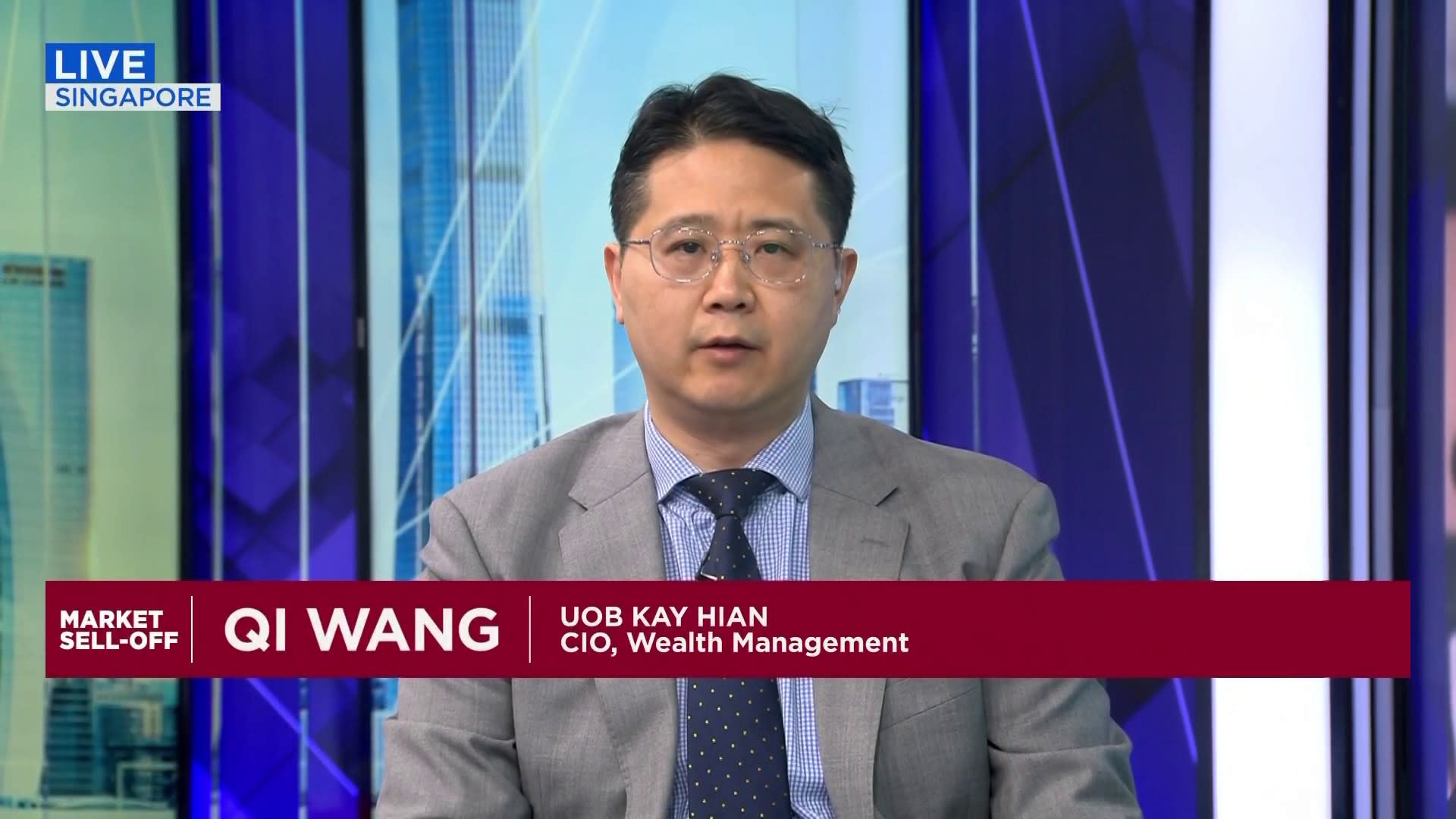

“UBS will actively engage in the consultation process with all relevant stakeholders and contribute to evaluating alternatives and effective solutions that lead to regulatory change proposals with a reasonable cost/benefit outcome. UBS will also evaluate appropriate measures, if and where possible, to address the negative effects that extreme regulations would have on its shareholders,” the bank said.
Johann Scholtz, senior equity analyst at Morningstar, noted that the news was “as bad as it will get for UBS.”
The banking giant “can now lobby for some concessions and take some actions themselves to mitigate impact, for instance upstream some excess capital from its subsidiaries,” Scholtz said. He added that while negotiations will start immediately, there will be a long-phase out for UBS to deploy the measures, with the earliest that it will apply in full being 2034.
JPMorgan analysts led by Kian Abouhossein also stressed that a long lead time of six to eight years for UBS to fulfil the deduction of investments in its foreign units is a “positive” outcome for the bank. With finalization expected around 2027, JPMorgan expects full implementation by 2033 at the earliest.
UBS is expected to generate around $12 billion [per annum] in profits with a dividend of about $3 billion, which means the bank can “fulfill its ‘capital gap’ by 2033+ and still continue with buybacks,” the analysts said.
The Swiss National Bank said it supported the measures from the government as they will “significantly strengthen” UBS’ resilience.
“As well as reducing the likelihood of a large systemically important bank such as UBS getting into financial distress, this measure also increases a bank’s room for manoeuvre to stabilise itself in a crisis through its own efforts. This makes it less likely that UBS has to be bailed out by the government in the event of a crisis,” SNB said in a Friday statement.
‘Too big to fail’
UBS has been battling the specter of tighter capital rules since acquiring the country’s second-largest bank at a cut-price following years of strategic errors, mismanagement and scandals at Credit Suisse.
The shock demise of the banking giant also brought Swiss financial regulator FINMA under fire for its perceived scarce supervision of the bank and the ultimate timing of its intervention.
Swiss regulators argue that UBS must have stronger capital requirements to safeguard the national economy and financial system, given the bank’s balance topped $1.7 trillion in 2023, roughly double the projected Swiss economic output of last year. UBS insists it is not “too big to fail” and that the additional capital requirements — set to drain its cash liquidity — will impact the bank’s competitiveness.
At the heart of the standoff are pressing concerns over UBS’ ability to buffer any prospective losses at its foreign units, where it has, until now, had the duty to back 60% of capital with capital at the parent bank.
Higher capital requirements can whittle down a bank’s balance sheet and credit supply by bolstering a lender’s funding costs and choking off their willingness to lend — as well as waning their appetite for risk. For shareholders, of note will be the potential impact on discretionary funds available for distribution, including dividends, share buybacks and bonus payments.
“While winding down Credit Suisse’s legacy businesses should free up capital and reduce costs for UBS, much of these gains could be absorbed by stricter regulatory demands,” Johann Scholtz, senior equity analyst at Morningstar, said in a note preceding the FINMA announcement.
“Such measures may place UBS’s capital requirements well above those faced by rivals in the United States, putting pressure on returns and reducing prospects for narrowing its long-term valuation gap. Even its long-standing premium rating relative to the European banking sector has recently evaporated.”
The prospect of stringent Swiss capital rules and UBS’ extensive U.S. presence through its core global wealth management division comes as White House trade tariffs already weigh on the bank’s fortunes. In a dramatic twist, the bank lost its crown as continental Europe’s most valuable lender by market capitalization to Spanish giant Santander in mid-April.
– CNBC’s Ganesh Rao contributed to this report.