Two graduate students research chemical products in a laboratory in Xiwangzhuang Town, Zaozhuang City, Shandong province of China, on Dec. 26, 2023.
Nurphoto | Nurphoto | Getty Images
BEIJING — For all the attention on U.S.-China competition in artificial intelligence, new studies point to China’s rapid rise in biotechnology, especially for drug and agricultural development.
Out of five critical tech sectors, “China has the most immediate opportunity to overtake the United States in biotechnology,” the Harvard Belfer Center for Science and International Affairs said Thursday in its release of a “Critical and Emerging Technologies Index,” covering AI, biotech, semiconductors, space and quantum.
While the U.S. is still the leader in all five, “the narrow U.S.-China gap [in biotech] suggests that future developments could quickly shift the global balance of power,” the report said.
The assessment echoes growing concerns in Washington. In fact, the U.S. National Security Commission on Emerging Biotechnology struck a more urgent tone in an April report, citing two years of research.
“There will be a ChatGPT moment for biotechnology, and if China gets there first, no matter how fast we run, we will never catch up,” the bipartisan Congressional commission said in the report, referring to the transformative chatbot released by U.S.-based OpenAI.
“Our window to act is closing. We need a two-track strategy: make America innovate faster, and slow China down,” the commission said. It recommends that the U.S. government spend at least $15 billion over the next five years to support the domestic biotech sector.
China’s biotech industry has evolved to the point that U.S. and European pharmaceutical giants in the last several months have spent billions to acquire China-developed drugs that could treat cancer if commercialized with regulatory approval. In March, British pharmaceutical giant AstraZeneca announced it will invest $2.5 billion in a research and development center in Beijing.

The Harvard Belfer Center pointed out that China’s biotech strengths stem from its “dominance in pharmaceutical production and manufacturing,” in addition to having more human talent than the U.S.
China also has a “more flexible regulatory regime and the ability to push things out faster,” Cynthia Y. Tong, one of the Harvard report’s authors, told CNBC in an interview Thursday. She noted that the U.S. tends to have a longer approval process, as well as more drawn out research and development period.
And just as China is developing its biotech sector, reports from the U.S. biotech hub of Cambridge and Boston are revealing layoffs and empty labs.
A big strategy
China has long used multi-year plans and preferential state policies to encourage the development of key technologies. Biotech is no different, gaining high-level support back in 2007.
“Currently, the U.S. government has no cohesive, intentional biotechnology strategy, while China is gaining ground thanks to its aggressive and carefully coordinated state-led initiatives,” the U.S. security commission said.
The worry is that just as Chinese restrictions on rare earths start to hit car manufacturers, Chinese dominance in biotech could become yet another form of leverage for Beijing over the U.S. and other countries.
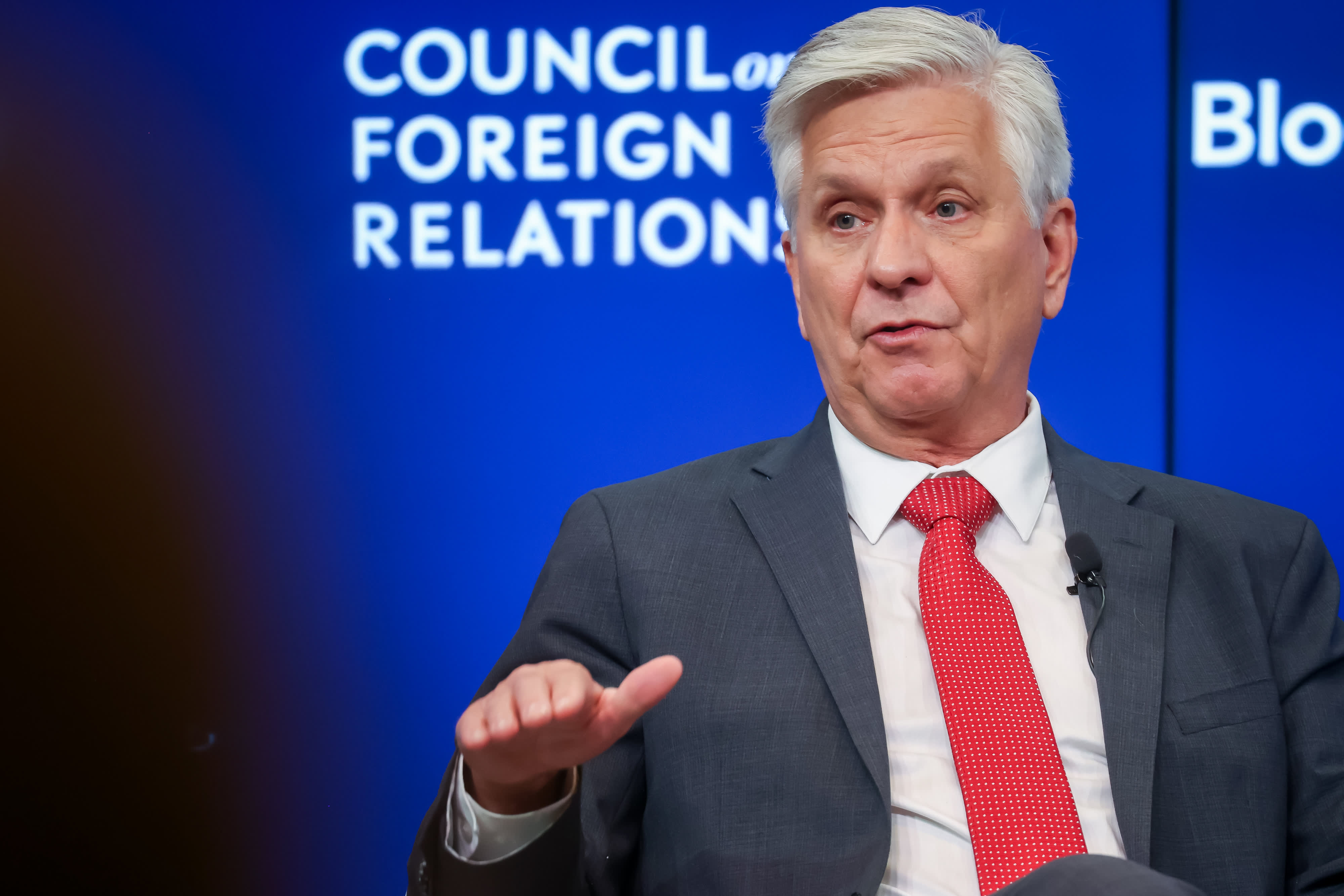
“The likelihood there’s going to be cooperation [between the] U.S. and China on anything is very low, in some ways least likely on biotech and AI” because of the congressional report, said Eric Rosenbach, director of the defense, emerging technology, and strategy program at Harvard’s Belfer Center. He was chief of staff at the U.S. Department of Defense from 2015 to 2017.
He expects more U.S. pressure on China.

Subscribe now
It remains to be seen what that would mean in practice for businesses — though some say the future of biotech development is inherently global.
Insilico Medicine, a startup using AI to cut drug discovery costs, relies on a global team spread across China, North America and the Middle East, according to its founder and CEO Alex Zhavoronkov. On Tuesday, the company announced with a paper in Nature Medicine that it was the first to see successful clinical testing with an AI-discovered drug.
While Insilico’s AI work typically happens in Canada and Abu Dhabi, the chemical testing and experiments are done in China, Zhavoronkov said, adding that the head of clinical development is in Boston. He declined to comment on a commercialization timeline in light of conversations with regulators.
Other data shows that China has surpassed the U.S. in the number of clinical trials conducted, seen significant patent growth and boasts the most life sciences construction activity in the world.
China-based Capital O venture partner Yang Fan, who previously worked in the pharmaceutical industry, said he expects the best biotech companies of the future will navigate different countries’ regulations and use resources across the globe, if not benefit from arbitrage opportunities given different requirements and cost of entry in various markets.
“The Chinese market is like a big supermarket for anything that can be commoditized, AI or biotechnology,” he said, adding that new startups in China have to be “really good” to stand out. As AI drives innovation costs down, Fan predicts that in biotech, “the real DeepSeek moment is probably going to happen in five years.”