A Honda sedan moves down the assembly line on Jan. 28, 2025 at the automaker’s assembly plant in Marysville, Ohio.
Michael Wayland / CNBC
MARYSVILLE, Ohio — Honda Motor is launching the next generation of its manufacturing in a historically unusual place for the 75-year-old Japanese automaker: Ohio.
Honda is in the midst of completing more than $1 billion in new investments — upped Wednesday from an initially announced $700 million — in the state this year. Upgrades most notably include installing six “giga presses,” which were made well-known by Tesla, and a new “cell” manufacturing system for its upcoming electric vehicle battery cases.
The company’s emerging EV hub in Ohio, including a separate $3.5 billion battery plant, will be the flagship for Honda’s global manufacturing operations. That includes its Marysville Auto Plant being capable of producing traditional vehicles, hybrids and EVs on the same assembly line, officials said during a daylong tour of the operations.
“The Honda EV hub in Ohio is establishing the global standard for EV production for people, for technology and for processes,” said Mike Fischer, North American lead for Honda’s battery-electric vehicle projects. “As we expand EV production regionally and globally, this is the footprint and the characteristic performance that will be used.”
Honda displays half of one of its new battery packs for electric vehicles on Jan. 28, 2025 at its engine and components plant in Anna, Ohio.
Michael Wayland / CNBC
Typically such important manufacturing changes would begin in Honda’s home country of Japan and then get rolled out to facilities in the U.S. and elsewhere, according to company officials.
The Ohio investments were initially announced in October 2022 as part of the Biden administration’s push to on-shore manufacturing. They remain important amid threats of potential increases in tariffs for imported products such as automobiles by President Donald Trump.
Honda produced more than 1 million vehicles at five U.S. assembly plants in 2024. About 64% percent were sold in the U.S., while the remainder were exported. It has one assembly plant in Mexico.
Once completed, Honda will be able to produce roughly 220,000 vehicles annually at its Marysville plant, located in central Ohio outside of Columbus. The 4 million-square-foot facility currently produces several Honda and Acura vehicles, which are expected to be joined later this year by an all-electric Acura RSX crossover — the first EV produced by Honda.
Honda 0 Saloon & Honda 0 SUV prototypes
Honda



The Japanese automaker was late to invest in EVs compared with other automakers. It currently sells two all-electric crossovers — Honda Prologue and Acura ZDX — in the U.S., but those vehicles are produced by General Motors in Mexico.
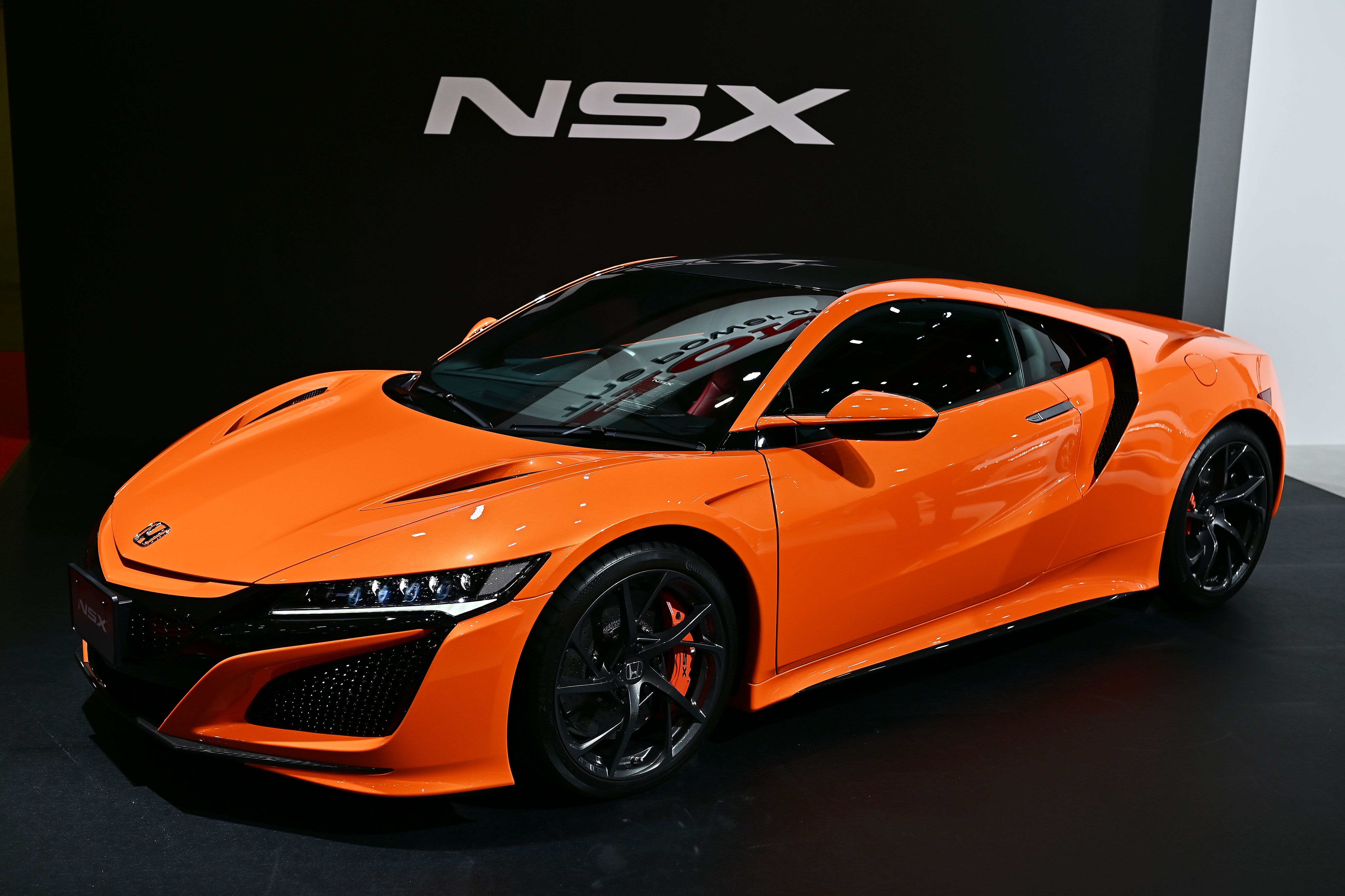
The new Acura crossover will be followed by the Honda 0 SUV and Honda 0 Saloon EV prototypes the company debuted last month at CES in Las Vegas.
The aluminum battery packs for the new EVs will be produced at Honda’s nearby engine complex in Anna, Ohio — the company’s largest engine facility globally that has grown from a small rectangle building in 1985 to a more than 2.8-million-square feet plant.
“We’re establishing this large aluminum production technology for all Honda,” Tim Stroh, EV battery case project leader, said. “The goal here is to roll that out to other products, other factors across the world.”
A row of Honda’s new 6,000-ton high-pressure die cast machines that will “megacast,” or “gigacast,” as Tesla has referred to it, battery packs for the automaker at its engine and components plant in Anna, Ohio.
Michael Wayland / CNBC
To produce the battery packs and other EV components, as well as potentially engines in the future, the company is installing six massive, 6,000-ton high-pressure die cast machines that will “megacast,” or “gigacast” materials, as Tesla has referred to it. The massive machines are the size of a small house and use an enormous amount of pressure to form parts. Current Honda presses go up to 3,500 tons in Ohio.
Done correctly, gigacasting can theoretically slash per-unit manufacturing costs by eliminating the welding of dozens of body parts by casting one single module, according to S&P Global Mobility.
Once the packs are cast, they will be shipped from Anna to Marysville and other plants to have battery cells from Honda’s joint venture operations with LG Energy Solution installed before being used in the final assembly of EVs.
A Honda employee at the automaker’s large vehicle assembly plant in Marysville, Ohio demonstrates
Michael Wayland / CNBC
To combine the battery cells and packs in Marysville, Honda is installing nearly 60 flexible manufacturing “cells,” or zones, for the battery assembly. Instead of a traditional assembly line, where parts are installed as a vehicle moves, the new production process occurs parallel to the main line in zones that make it so any potential slowdowns or problems don’t impact the main line.
“This is considered the second founding for Honda,” said Bob Schwyn, senior vice president of Honda Development and Manufacturing of America. “We’re using the opportunity to reimagine our approach to manufacturing.”
Honda has referred to its transition to electric vehicles, including fuel cells, as its “second founding.” Despite slower-than-expected adoption of EVs in the U.S., the company maintains previously announced goal of achieving zero environmental impact by 2050, through three critical action areas: carbon neutrality, clean energy and resource circulation.
Rows of new “cell,” or zone, production system for assembly of electric vehicle battery packs on Jan. 28, 2025 at Honda’s Marysville Assembly Plant.
Michael Wayland / CNBC
That goals also includes exclusively selling zero-emissions vehicles by 2040. Many other automakers have delayed or withdrawn such targets in recent years.
The more than $1 billion investments in current Ohio facilities also include several new manufacturing processes and techniques to lower emissions and waste, including using a special form of structural aluminum for the EV battery packs that can be recycled and reused.
“We’re using the opportunity to reimagine our approach to manufacturing and create new value in the area of environmental responsibility,” Schwyn said. “This includes strategies to recapture our products at end-of-life and then recycle or reuse 100% of the materials, especially finite materials for EV batteries to essentially make new Hondas out of old Hondas.”