Casarsaguru | E+ | Getty Images
Millions of workers left their jobs during the “Great Resignation” of the Covid-19 pandemic, but economic insecurity and uncertainty have once more turned the tides of the labor market toward the “Great Stay.”
Economists coined the term to refer to fewer employees leaving jobs, and fewer employers hiring or firing new workers.
“We had this ‘Great Resignation’ just a couple of years ago,” Nela Richardson, chief economist at ADP, told CNBC. But now, “workers aren’t going anywhere,” she noted.
“They’ve got their dream job, which is probably partly at home, maybe with a big salary pickup … And what we actually see in the data is very low turnover, which is very unusual in the U.S.,” she added.
“I call it the ‘Great Stay.’ People are staying put. They’re not leaving. And they’re staying put in things like IT and software development, where you would normally see a lot of turnover,” she noted.
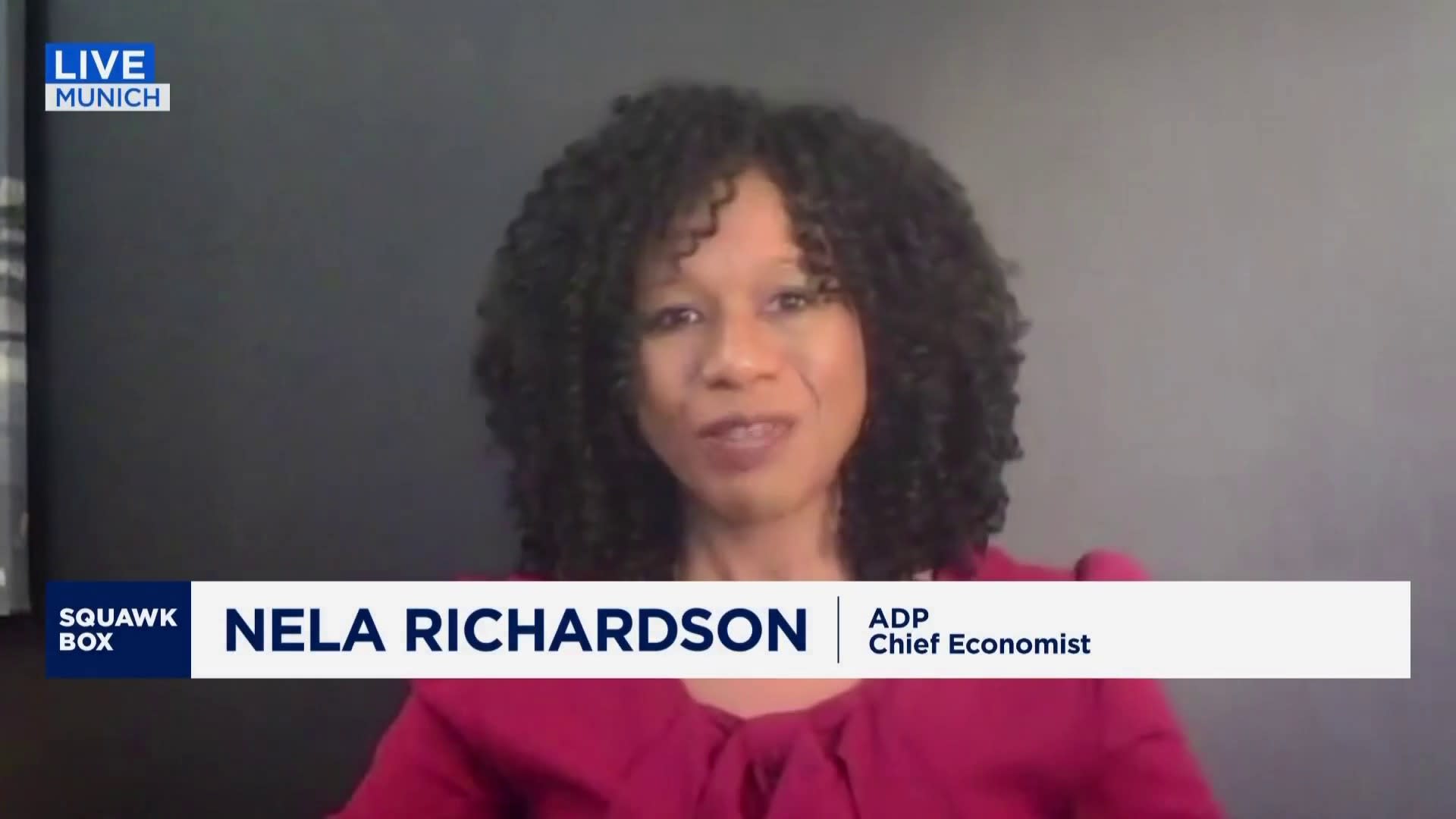
Likewise, Richardson said firms were putting hiring decisions on hold “because they’re uncertain about the road ahead, not necessarily because they’re trying to reduce their headcount.”
Describing the trend as a “no-hire, no-fire market,” Richardson said the momentum is clearly slowing in terms of hiring, although initial U.S. jobless claims — a proxy for layoffs — are still near historical lows.
“We think it’s no-fire, no-layoff [environment] right now because firms are so reluctant to let people go, because it took so long in the U.S. to get them back.”
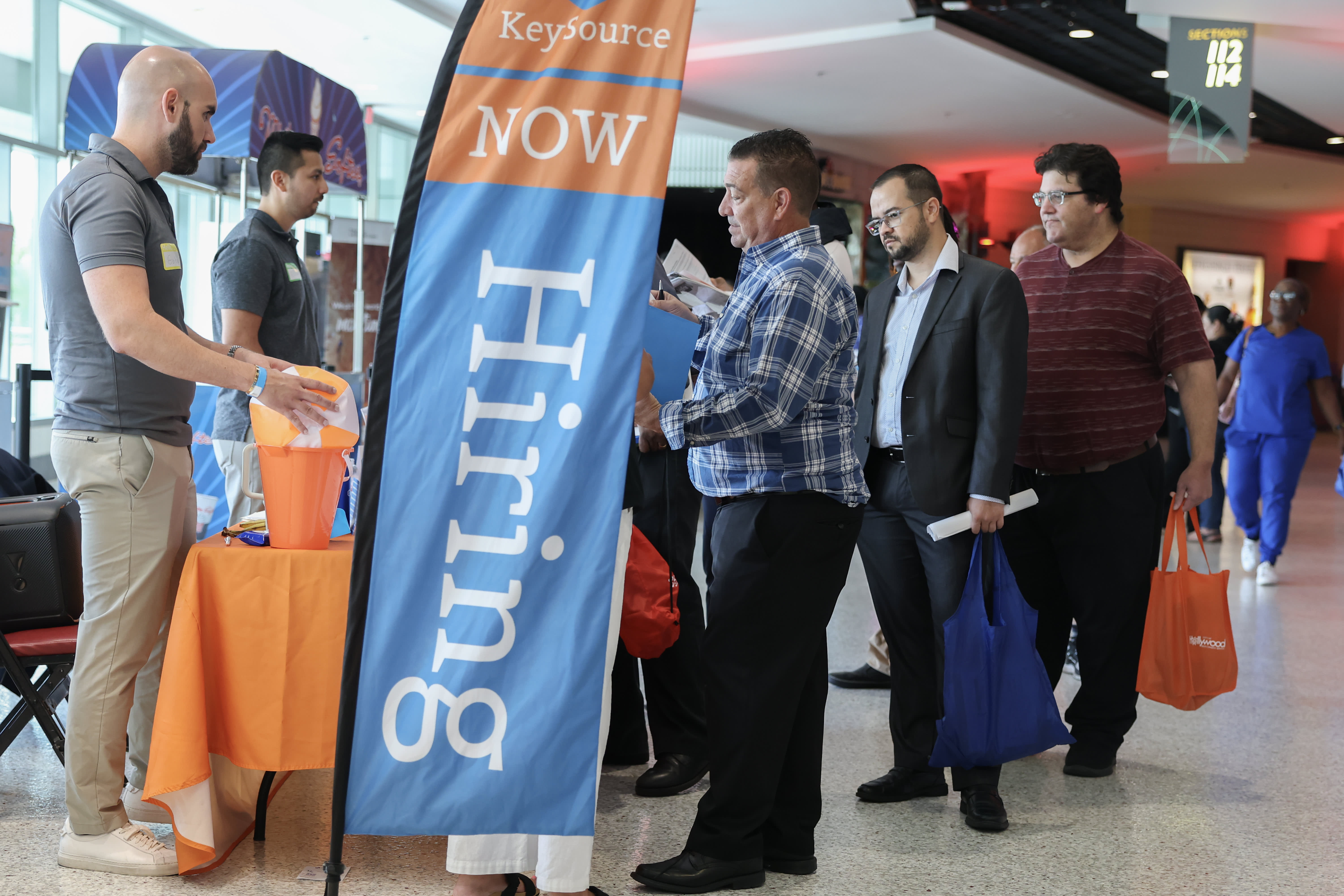
The turnaround from the “Great Resignation” is dramatic: the Covid-19 pandemic ended the longest employment and economic expansion in U.S. history, according to the U.S. Bureau of Labor Statistics, with around 50.5 million people quitting their jobs in 2022, up from 47.8 million in 2021.
But there are signs that the U.S. jobs market is cooling; nonfarm payroll growth came in at a slower-than-expected 73,000 in July, the latest data from Aug.1 showed, while the unemployment rate ticked higher to 4.2%.
The weak report could provide an incentive for the U.S. Federal Reserve to lower interest rates when it next meets in September, economists said.
UK seeing similar shift
A similar trend was seen in the U.K., where the number of job vacancies rose to a record 1,172,000 over the August-October 2021 period, according to the Office for National Statistics. By the second quarter of 2022, the total number of job vacancies had reached 1,295,000, the ONS said.
Fast forward to 2025 and the latest U.K. jobs data, released mid-August, showed the country’s labor market continued to cool with job vacancies falling by 5.8% to 718,000 between May to July in 16 out of 18 industry sectors, according to the ONS.
It added that “feedback from our Vacancy Survey suggests some firms may not be recruiting new workers or replacing workers who have left.”
Shoppers pass along the high street in Maidstone, UK, on Wednesday, April 16, 2025.
Bloomberg | Bloomberg | Getty Images
The U.K. economic inactivity rate — reflecting the number of people aged between 16-64 who are not in work and not actively looking for work — was estimated at 21% in April to June 2025, the ONS said.
“Business hiring has been continuously dropping for the past 3 years, with recent dips spurred in part by higher labour costs from tax rises and the minimum wage hike, as well as overall economic uncertainty,” noted Monica George Michail, associate economist at the National Institute of Economic and Social Research think tank.
“Meanwhile, falling inactivity and rising unemployment are increasing the supply of labour.”
Neil Carberry, the chief executive of the Recruitment and Employment Confederation, told CNBC that Britain was also seeing a “Big Stay” trend, with firms reluctant to go on a hiring spend until they have a better understanding of the trajectory of the U.K. economy, which has been experiencing lackluster growth.
“The truth is, jobs are created by businesses, and the engine of job creation is growth … Unless you get business in a position where they want to hire in the United Kingdom, you’re not going to get anywhere,” he told CNBC.
“On the market at the moment, it’s quite odd. Permanent recruitment has been low for two or three years now, and it hasn’t quite come back [since Covid-19], but businesses are just, like, sitting there with a hand over the button. So what lots of our members say is that they can see what they’re going to do, they just want a bit of confidence to do it.”
— CNBC’s Jeff Cox and Greg Iacurci contributed reporting to this story