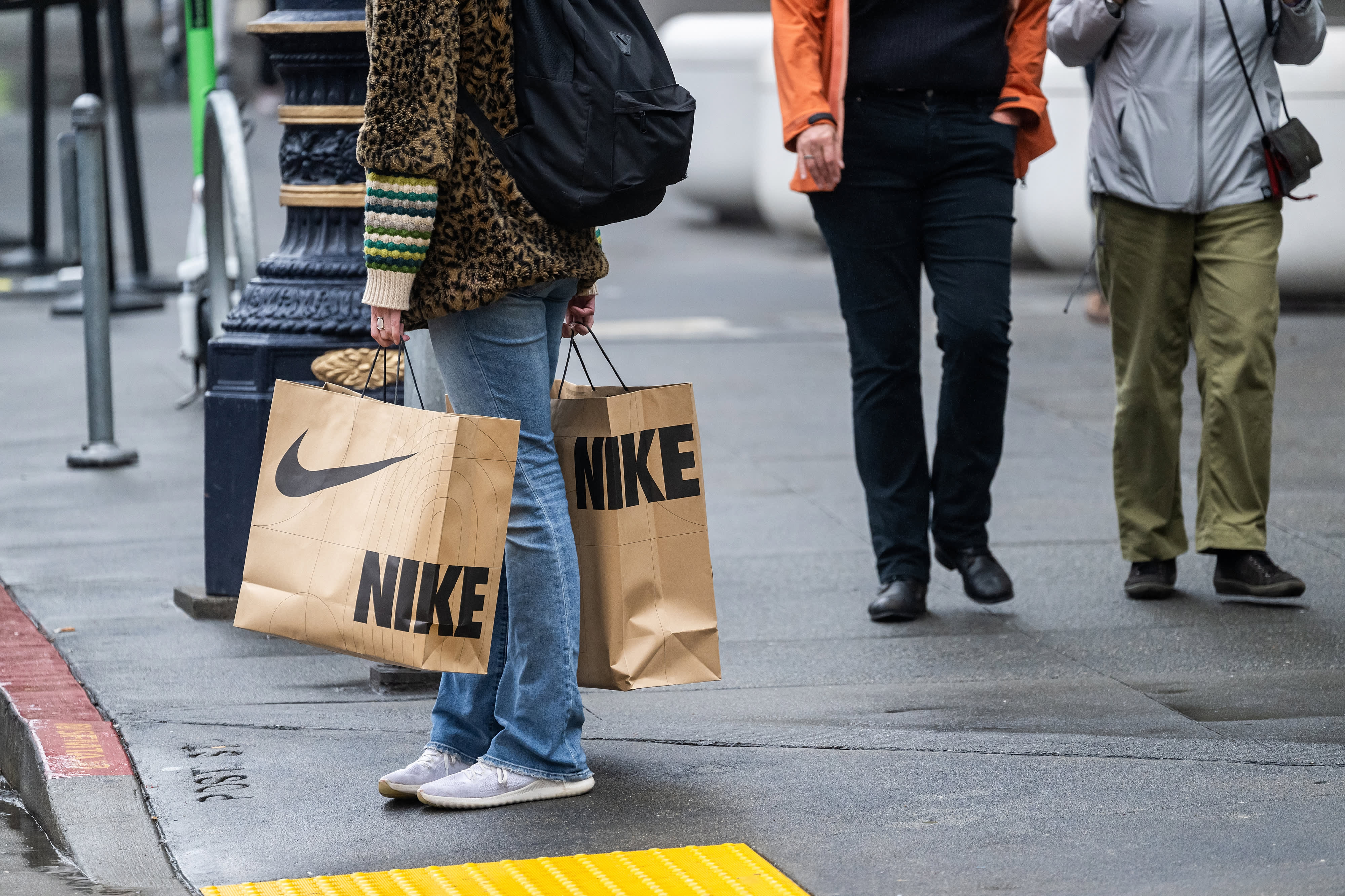
Kate Green | Getty Images Entertainment | Getty Images
“Treatonomics” — a consumer trend that covers spending on ‘everyday luxuries’ to larger, life-affirming experiences — is booming as people look for a mood boost in ongoing unsettling economic times.
Spending on small-item ‘pick-me-ups’ is a well-established recession-resistant trend, with consumers often turning to purchases of modest personal items such as make-up, perfume and candles — or even collectible rubber ducks or Labubu dolls — for a morale boost when times are hard or uncertain.
It’s no wonder then, that the consumer trend has long been seen as a bellwether for how consumers feel about the wider economic backdrop, which is currently typified by inflationary pressures, persistently high interest rates and concerns over growth and jobs.
The phenomenon is not new; the “lipstick effect” — the theory that lipstick sales increase during economic downturns — has been around for almost a century, for instance. First documented during the Great Depression in the 1930s, the term had a renaissance in the 2000s when Leonard Lauder, former chairman of makeup brand Estée Lauder, noticed a spike in sales after the Sept. 11 terrorist attacks.
“The lipstick effect means basically, buying yourself small treats when you’re under financial pressure,” John Stevenson, retail analyst at Peel Hunt, told CNBC Tuesday.
“You can’t afford a new dress or outfit, but you can always get a new lipstick. You can’t afford to get a new sofa, but you can get a throw or some cushions. You can’t redecorate the house, but you can get a new tablecloth,” he said, noting this was why the homewares retail category is “much more resilient than people imagine.”
SHANGHAI, CHINA: A woman checks out the lipsticks at a department store in Shanghai, 16 August 2004.
LIU JIN | AFP | Getty Images
The Covid-19 pandemic, and a re-evaluation of personal wellbeing and what makes for an enriching and memorable life, has spurred the trend of treatonomics with consumers willing to make everyday sacrifices in order to have “experiences,” particularly one-off events such as spending $200 or more for a ticket to a Taylor Swift concert or the Oasis reunion tour.
“Treatonomics is almost another step further [than the lipstick effect] where you are cutting back on on everyday living costs, you’re cutting back on basics, maybe you’re buying more own brands in the supermarket, but by the same token, you’ll go and do an Oasis concert for the weekend and spend £500-£1000 (up to $1330),” Stevenson said.
What is driving ‘Treatonomics’?
Economists agree that the treatonomics trend has been able to flourish in an era of economic uncertainty and shaky consumer confidence.

“This rise of ‘Treatonomics’ — also called ‘Little Treat Culture’ by Gen Z on TikTok — is less about ‘guilty pleasures’ and instead about injecting moments of guilt-free joy into life,” Meredith Smith, senior director at retail analysis firm Kantar told CNBC Tuesday.
“It’s like the ‘Lipstick Effect’ on steroids, because consumers have this heightened sense of uncertainty coupled with more options and access than ever before to turn life’s everyday decisions into an opportunity for a treat. As a result, people are romanticising their water intake, how they dress and decorate their homes, buying themselves treats as a ‘mental health’ boost and more – all to inject joy into fraught times.”
Smith said life’s traditional milestones, such as marriage, home ownership, workplace achievement and retirement, looked different now for “nearly every living generation” and were being reinvented or disappearing, “out of desire or because they’re no longer attainable.”
That has prompted a shift from being able to celebrate ‘milestones’ to celebrating more ‘inch-stones,’ resulting in this rapid rise of treatonomics.
“For example — for those who can’t afford a home before 40, treating has been a welcome respite and a way to express themselves in their environment when a milestone passes them by,” Smith said.
“For those without a partner or children, instead of celebrating weddings and baby showers, they are throwing their energy into breakup parties, dog birthdays, high-effort wellbeing-driven treating routines and more. We’ve seen a rise in ‘Resignation Parties’ in China, ‘Divorce Parties’ in the U.S. and Europe, and people treating themselves to cakes or even diamonds after a breakup or when they don’t get a promotion at work,” he noted.
A woman celebrating her dog’s birthday.
Urbazon | E+ | Getty Images
On a similar note, Millennials and Gen Z have turned to ‘Kidulting’ – enjoying adult versions of joys from childhood — which has “catapulted LEGO’s adult offering, seeing some spend up to $1,000 on kits,” Smith added.
Consumer confidence underlies the mood
In the U.K., GfK’s Consumer Confidence Index measures a range of consumer attitudes, including forward expectations of the general economic situation and households’ financial positions, and views on making major household purchases. It fell to -19 in July 2025, down by one point from June.
Meanwhile, in the U.S., consumer confidence saw a slight increase in July. Overall, however, consumer confidence levels remain subdued “below last year’s heady levels,” Stephanie Guichard, senior economist of Global Indicators at The Conference Board, which produces the consumer confidence data, noted in a statement last week.
That lingering pessimism feeds into the treatonomics trend, economists say, meaning that more affordable and perhaps more gratifying purchases and experiences, will remain attractive.
Customers look at Labubu dolls on display at Pop Mart’s new store in Las Vegas July 12, 2025.
Kara Gildea | Las Vegas Review-Journal | Tribune News Service | Getty Images
Kantar’s Global Economic Policy Uncertainty Index, a measure of the degree of uncertainty surrounding economic policy at a global level, “has declared the current era as one of ‘Great Uncertainty’, relative to the last 40 years. Life feels uncertain, with no light at the end of the tunnel – yet,” Smith said.
The volatility and uncertainty we are experiencing are not likely to dissipate for the next five to eight years, Kantar predicts.
“This gives us a strong indication that treatonomics will persist for at least another three to five years – though we can expect to see trends in ‘Little Treat Culture’ to move faster and become more fragmented by geography and cultural niches. This is a challenge for brands, who will need to be agile and attuned to how these micro-trends are developing.”