Digital render of NEOM’s The Line project in Saudi Arabia
The Line, NEOM
When Saudi Arabia first announced plans to reinvent its oil-based economy, huge infrastructure projects like the futuristic region NEOM and smart city The Line were championed as central to the transformation.
Almost a decade on from the launch of its “Vision 2030” transformation strategy, however, and Riyadh’s priorities have shifted with the times.
Now, technology and artificial intelligence are key priorities for the kingdom.
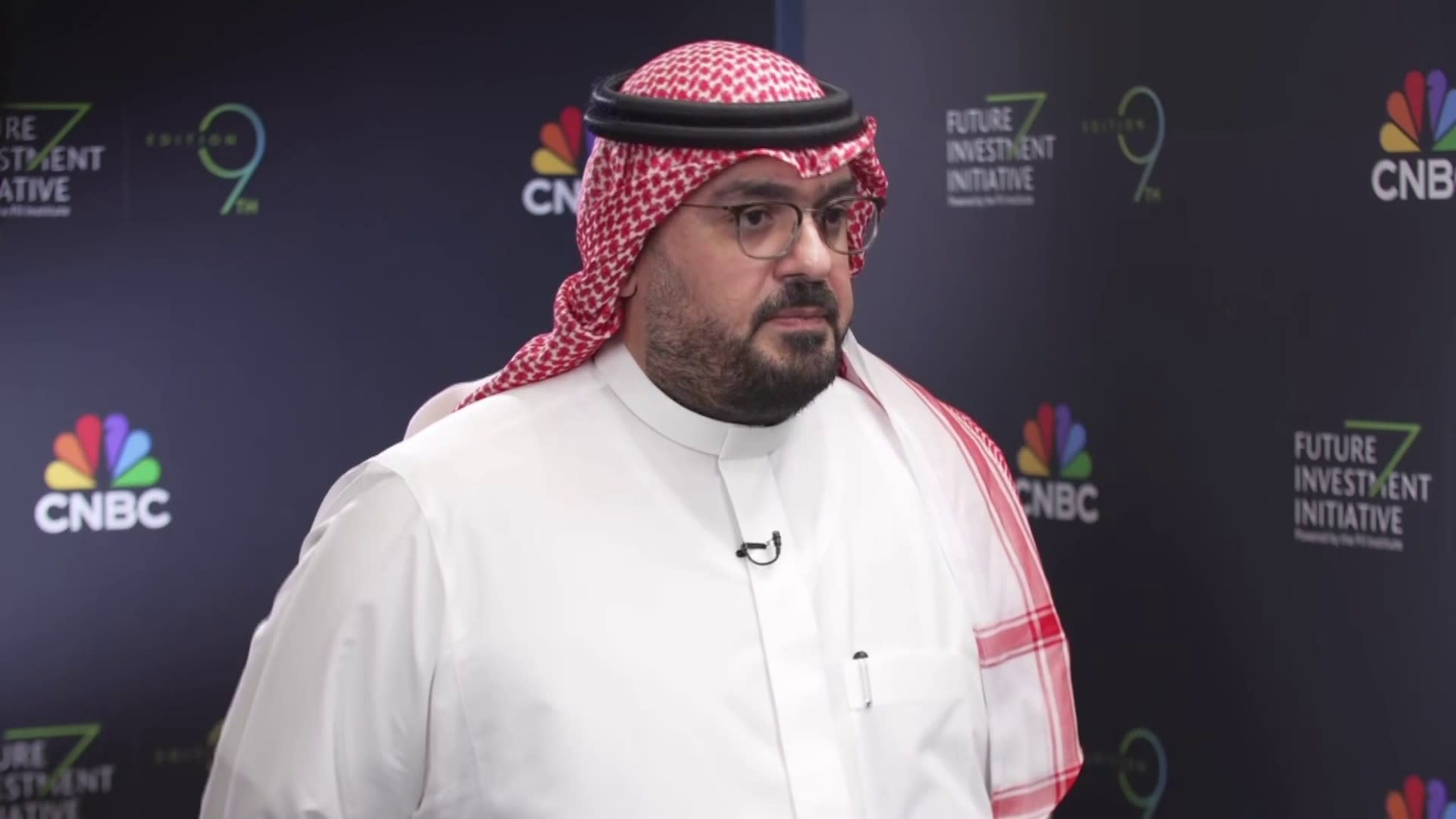
“We’re reprioritizing a little bit towards sectors that need it the most, and today it’s technology, artificial intelligence,” Faisal Alibrahim, Saudi’s economy minister, told CNBC Wednesday.
“We want to move into an economic structure that is productivity-led and at the heart of productivity is technology, innovation and generative AI,” he told CNBC’s Dan Murphy on the sidelines of the Future Investment Initiative (FII) in Riyadh.
Riyadh’s Vision 2030 strategy to diversify its economy away from oil has seen it invest heavily in tourism, cultural and sports events, technology and infrastructure.
“Our primary objective is non-oil growth and non-oil growth has been steadily increasing, this is our main driver of economic growth,” Alibrahim said, noting that non-oil activities now represent 56% of total real GDP in Saudi Arabia.
“All of our transformation efforts are to achieve non-oil growth so we can diversify our economy from having to rely on a single commodity price and how big the government budget is, but also to rely on private sector dynamism and to be ready for the future.”
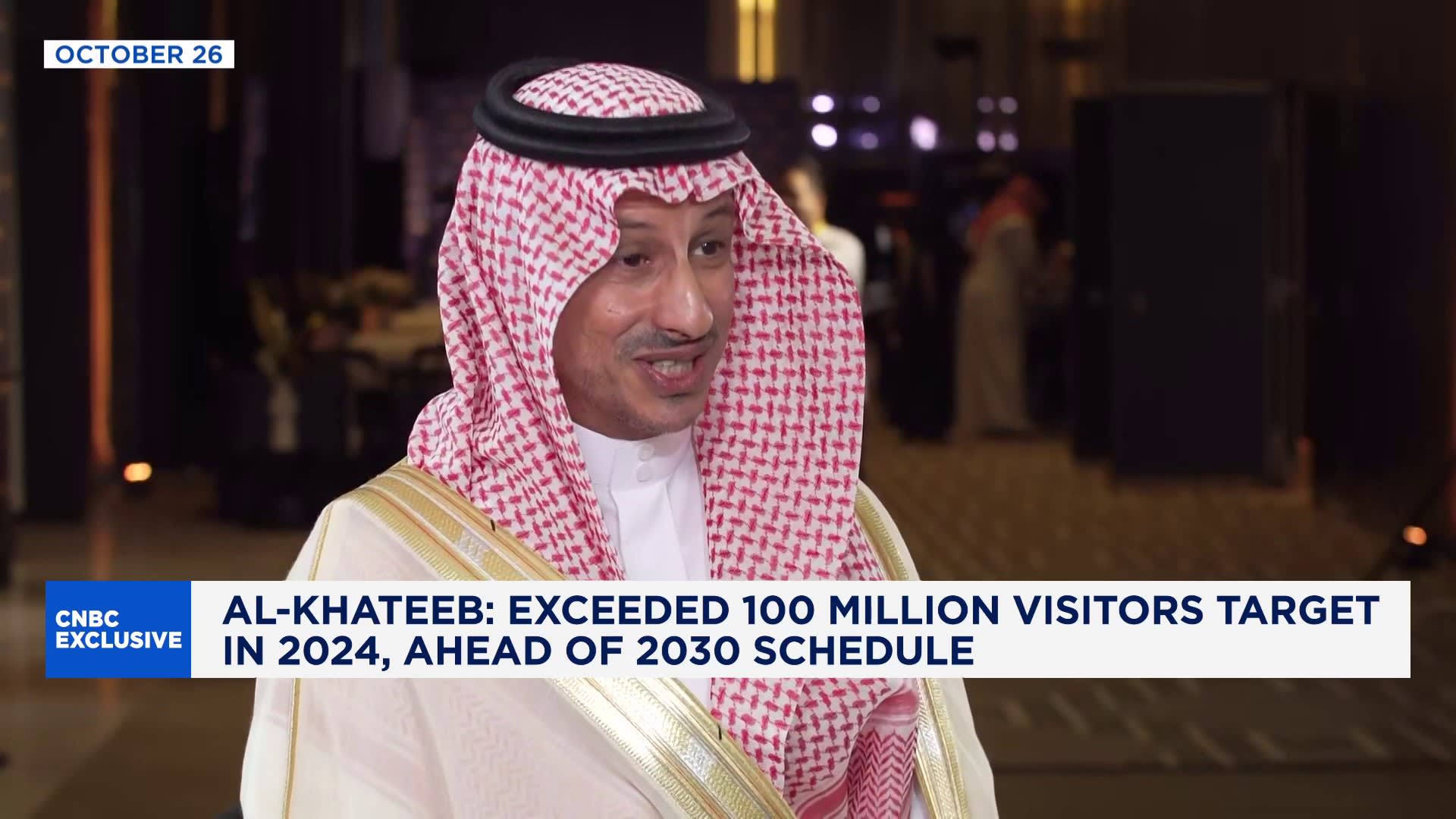
Alibrahim said sectors like tourism had been performing far better than expected, with targets set for 2030 achieved years in advance, prompting the kingdom to up its target to 150 million visitors by the end of the decade, he said.
What about NEOM?
A key pillar of the Vision 2030 program is the creation of NEOM, an urban development project with a futuristic, car-free and zero-carbon city called The Line at its center.
It’s estimated that the entire NEOM project will cost $1.5 trillion, with The Line seen costing around $500 billion, but Saudi Arabia has looked to cut costs in recent years as its budget deficit has grown amid lower oil prices.
Alibrahim said “agility” and the ability to shift priorities and amend plans had become key parts of Vision 2030, noting that “the minute these plans aren’t solving for your optimal outcomes is the minute you need to re-plan and adjust.”
This shift in priorities has seen the technology, innovation and artificial intelligence sectors become more important areas of focus.
Abdulelah Albarrak, partner for government and public institutions at Oliver Wyman, agreed that Saudi’s economic plans had to respond technological change.
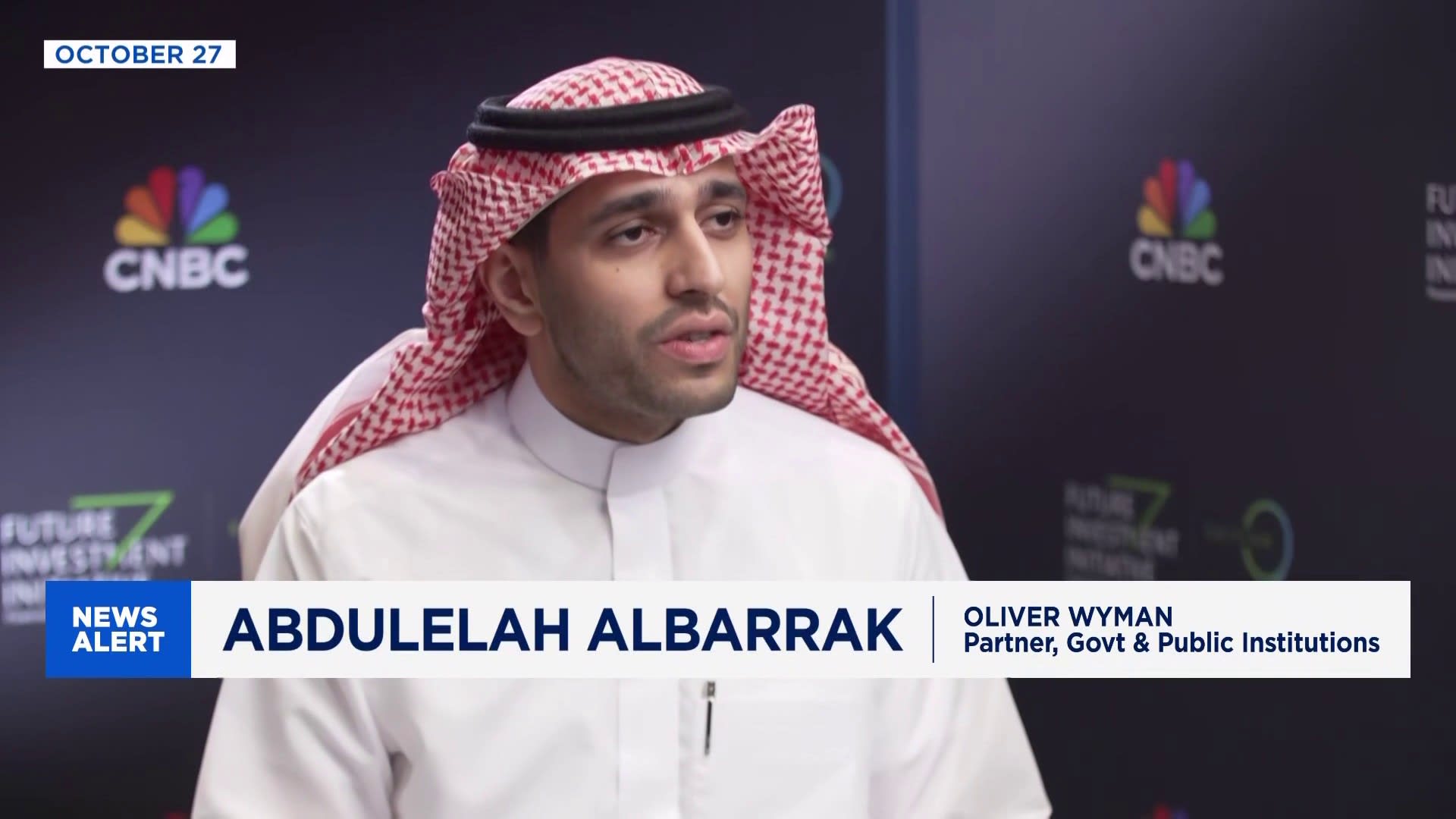
“Plans have to remain agile and responsive to changes in evolving technologies, in emerging technologies that really dictate change. It goes without saying these giga and mega projects have a significant economic and socio-economic impact in growing the nation, in driving and cultivating new sectors, but also the emergence of AI and other emerging trends require a lot of focus,” he said.
People come here ‘to make money’
Alibrahim told CNBC that Saudi was now seen as a land of opportunity for investors, as well as investment.
“People here stopped coming to Saudi to take money, they’re coming here to make money,” he said.
“Saudi stopped being only a source of capital to [being] also a capital of real economic opportunities,” he added. “We’re just unlocking the potential.”
Construction for The Line project in Saudi Arabia’s NEOM, October 2024
Giles Pendleton, The Line at NEOM
In September, the Saudi finance ministry estimated in a pre-budget statement that the budget deficit for 2026 will be 3.3% of GDP and that it was comfortable with that level.
“The government will continue to adopt expansionary spending policies that are contrary to the economic cycle, and [which are] directed towards national priorities with social and economic impact, and in a way that contributes to achieving the goals of the Saudi’s Vision 2030, and diversifying the economic base,” the ministry said in a statement.
It also forecast that the economy would expand 4.4% in 2025, which it said was supported by the growth of non-oil activities, and by 4.6% in 2026. On Wednesday, Alibrahim upgraded the 2025 forecast, stating that the kingdom’s 2025 real GDP growth will be 5.1%.
Saudi Arabia’s Finance Minister Mohammed Aljadaan has played down concerns over Saudi Arabia’s growing debt pile (albeit a relatively low one of 32% of GDP) and deficit.
“The ratio of public debt to GDP is still at relatively low levels compared to many other economies, and that it is within safe limits compared to the size of the economy, and is supported by financial reserves,” the minister said.
— CNBC’s Dan Murphy contributed reporting to this story.