The urban skyline and cityscape in Shanghai China.
Lu Shaoji | Moment | Getty Images
BEIJING — From coffee to cars to real estate, there’s a recurring pattern in China: companies rush into an industry, then resort to discounts to stay afloat. That has economists worried.
Natixis’ study of 2,500 listed Chinese companies reinforce how volume is growing while value is being hurt by deflationary pressure, Alicia Garcia Herrero, the firm’s chief economist for Asia-Pacific, said on a webinar Friday. “You can see it sector by sector, company by company.”
“On the surface you’re dominating, but deep inside you’re paying a high price to dominate,” she said. “You don’t get the revenue needed to continue.”
A reflection of the breadth of impact, consumer prices fell by 0.1% in the first six months of the year from a year ago, while factory-gate producer prices dropped by 2.8%, official data shows. In that time, only seven of 48 producer price sub-categories rose, versus about half of the 37 consumer price components.
That fierce and often unproductive competition is described as “involution” in China. The government has picked up on the term in recent policy documents, calling for efforts to tackle the trend.
While the trend has made tech and products more affordable for the mass market, it has also underscored worries of a vicious cycle that forces businesses to cut more jobs.
“With involution, the Chinese economy feels much colder than the headline growth suggests,” Larry Hu, chief China economist at Macquarie, said in a report Thursday. He pointed out that mainland China-listed “A share” companies expanded their workforces by just 1% in 2024, the slowest on record.
“From a more fundamental perspective, involution is both a feature and a bug of the ‘China model,'” he said. “Massive investment leads to price wars and poor returns for shareholders. But for policymakers, intense competition could help achieve industrial upgrading and self-reliance.”
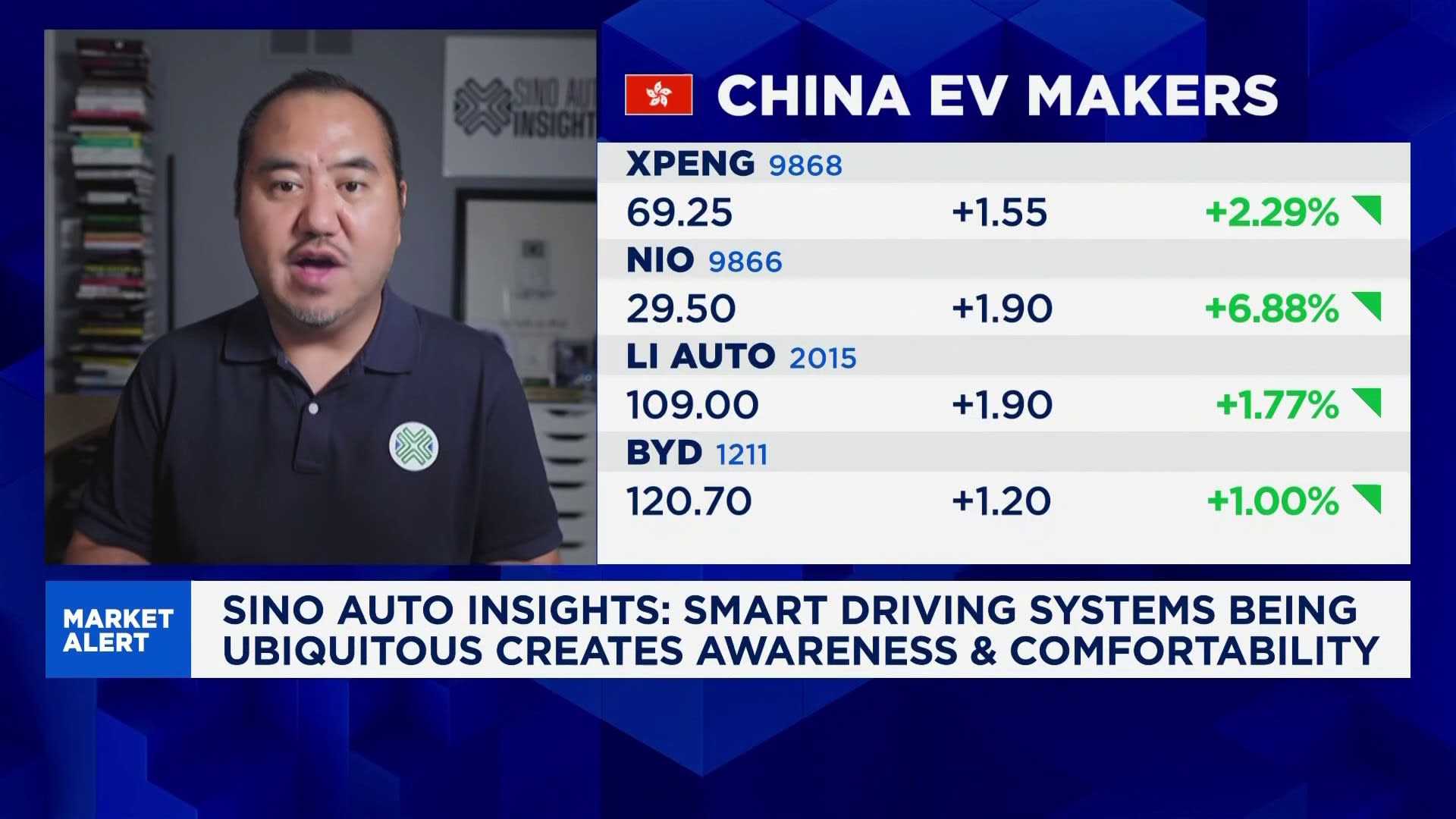
China’s push into electric cars has been the most apparent example, with industry giant BYD offering some discounts of nearly 30% or more this year and smartphone company Xiaomi pricing its latest SUV below that of Tesla’s Model Y.




U.S. coffee giant Starbucks has struggled in China with falling sales as it maintains prices of around 30 yuan per cup ($4.20) — while a host of rivals from Luckin Coffee to boutiques sell lattes for as low as 9.9 yuan.
Even in commercial real estate, property owners who have tried to raise prices in Beijing ended up facing higher vacancies, Rayman Zhang, managing director for North China, at property manager JLL, told reporters Thursday. He noted that there’s still insufficient demand — with little expectation for a turnaround in the near future.
China is expected Tuesday to report second-quarter gross domestic product growth of 5.2% from a year ago, according to a Reuters poll. That would be slower than the 5.4% increase in the first quarter, but in line with the national target of around 5% growth for the year.
But the second half of the year will likely reveal a far more stressful picture, warned Jianwei Xu, senior economist for Greater China at Natixis. He was also speaking at Friday’s webinar.
“We are seeing the profits especially for manufacturing companies, are still decreasing,” he said. “There could be more households under stress in [the second half of the year] because it will be more difficult to find a job.”
A different challenge
This isn’t the first time China has dealt with overcapacity, analysts pointed out, referencing excessive capacity in the state-dominated commodities sector about a decade ago. But this time, fewer state-owned companies are involved, making it more difficult for policymakers to act.
“The dominance of private firms in industries with overcapacity tends to complicate the coordination of mergers, even with government guidance,” Robin Xing, chief China economist at Morgan Stanley, and a team said in a report Thursday.
“The economy is also starting from a weaker point, which necessitates more demand-side stimulus to counter the impact of supply reduction,” the report said. “However, the government’s debt level is already high (~100% of GDP), which may constrain its willingness and ability to undertake aggressive fiscal expansion.”
China’s top leaders are expected to maintain the current fiscal stimulus at a high-level Politburo meeting late this month. Beijing in March raised the country’s fiscal deficit for the year to 4% — up from 3% last year.

Subscribe now
Notably, Chinese President Xi Jinping on July 1 led a high-level financial and economic commission meeting that called for more governance of “low price, disorderly competition,” according to a CNBC translation of Chinese state media.
The ruling Chinese Communist Party’s official Qiushi journal on July 1 even outlined several measures that promote standardized government behavior to address involution-style competition, warning of serious economic damage. The article cited high-level government meetings from the last several months.
“To achieve the growth target, Beijing will have no choice but to launch a major demand stimulus,” Hu said. “Afterwards, the improved domestic demand would ease the price competition among material producers and internet giants. But for manufacturers, it will be a long and painful process to absorb the existing capacity.”
Global spillover
Exacerbating problems with resolving China’s domestic overcapacity is the trade war with the U.S., Goldman Sachs analysts pointed out in a July 1 report.
The U.S. and European Union became more critical of China’s persistent overcapacity issues last year. Both have raised tariffs on Chinese electric cars in particular in an attempt to protect domestic automakers. The U.S. in April also targeted China with higher duties across the board.
The escalation of tariffs has made Chinese manufacturers more determined to build factories overseas, “potentially generating redundant supply in the coming years,” the Goldman report said. The analysts estimated a 0.5% to 14% increase in capacity by the end of 2028, up from the 0.4% to 10% expansion projected a year ago.
And among seven sectors — air conditioners, solar modules, lithium batteries, electric vehicles, power semiconductors, steel and construction machinery — five have more capacity than the entire global demand, the Goldman analysts said. Only ACs, and EVs — just barely — enjoy some market potential.
— CNBC’s Victoria Yeo contributed to this report.