Untere Schleuse wooden bridge in Thun, Switzerland.
Education Images | Universal Images Group | Getty Images
Switzerland’s government on Thursday cut its 2026 economic forecast for the country, citing the Trump administration’s punitive tariffs as a “heavy burden” on its industries.
Officials held their forecast for the Swiss economy to expand by 1.3% this year, but noted that this level of economic growth was “significantly below-average” for the country. For next year, they are now forecasting gross domestic product (GDP) growth will slow to 0.9% – down from a previous 2026 forecast of 1.2% growth.
“Higher U.S. tariffs have further clouded the outlook for the Swiss economy,” officials said in a news release on Thursday.
Switzerland is an export-driven economy, and the U.S. was the top foreign destination for its goods in 2024. Back in August, Switzerland was hit with 39% tariffs on goods sent to the U.S. after a Swiss delegation failed to secure a deal with U.S. officials — one of the highest country-specific rates imposed by the Trump administration.
The country’s biggest exports include watches, pharmaceuticals and precious metals — but the country is also renowned for its luxury goods, chocolate and skincare products. Branded and patented pharma products are newly subject to 100% tariffs upon entry to the U.S., unless their manufacturers have or are building production facilities in America.

Swiss officials said in Thursday’s update that under current trade conditions, global demand for Swiss goods and services is expected to rise “only modestly” in the coming quarters.
“The current trade policy environment presents particular challenges for Switzerland,” they said. “The additional tariffs are placing a heavy burden on affected sectors and export-oriented companies, with significant ripple effects expected across the broader economy. Moreover, persistent uncertainty is also dampening economic activity.”
The government also warned that most of America’s other trading partners had been granted lower tariff rates, placing Swiss exporters at a competitive disadvantage in the U.S. market. White House trade policy held significant influence over the future trajectory of Switzerland’s economy, they said.

“If Switzerland were to reach an agreement with the U.S. or if international trade policy were to ease, a more favorable development would be expected,” they said. “Overall, however, downside risks currently dominate.”
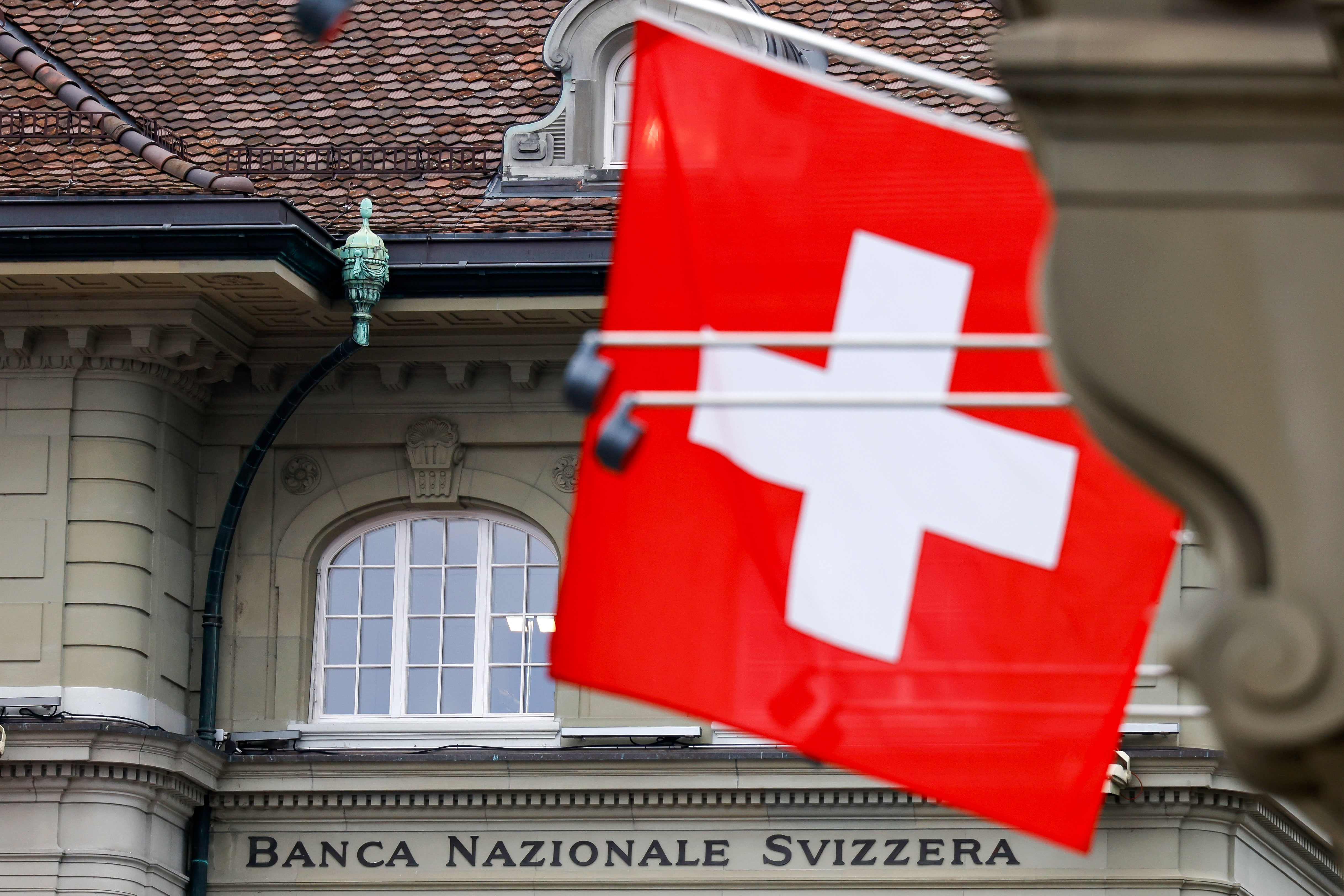
Beyond Trump’s tariffs, demand for the Swiss franc is also adding to Switzerland’s economic and diplomatic woes, with the currency – typically seen as a safe haven asset in times of broader volatility – gaining more than 12% this year amid lingering uncertainty. The rising franc has created headwinds for the country’s central bank by putting downward pressure on prices as policymakers battle to avoid disinflation and negative interest rates.

U.S. dollar/Swiss franc
Officials said on Thursday that the Swiss franc was continuing to play a role in Switzerland’s economic challenges – and cautioned that a further strengthening of the franc was possible.
“A deterioration in the international environment cannot be ruled out,” they said, noting that risks related to a market correction, global sovereign debt and the geopolitical landscape persisted.
“Should any of these risks materialize, further upward pressure on the Swiss franc would be expected,” they said.
Risks are mounting
Charlotte de Montpellier, senior economist, France and Switzerland at ING, told CNBC on Thursday that “risks for the Swiss economy are mounting.”
“Its exposure to the US market is big, amounting to 4% of GDP,” de Montpellier said in an email. “I estimate a cumulative direct impact of the current increase of US tariffs to 39% on Swiss GDP of about 0.86% in the first two years.”
De Montpellier recently revised her own growth forecast for Switzerland for 2026 down to 0.8% – almost half the growth rate she was forecasting at the beginning of this year.
“I believe that the risk are tilted to the downside and the likelihood of having a quarter of negative growth has strongly increased,” she said. “The Swiss economy, long buoyed by pharmaceutical exports, now faces a period of heightened uncertainty that will lead to a sharp deceleration of activity momentum.”
Melanie Debono, senior Europe economist at Pantheon Macroeconomics, said on Thursday that the new forecasts from the Swiss government were in line with her own.
“A fall in goods exports, as indicated by monthly nominal goods trade figures, coupled with falling investment — in light of the surge in uncertainty and despite [Swiss National Bank] rate cuts, which will ultimately feed through to lower interest rates faced by firms — means we expect the Swiss economy to enter recession in the second half of this year,” she told CNBC via email. “We think Swiss GDP will fall by 0.2% quarter-to-quarter in both Q3 and Q4.”
‘Terrible news’ for companies
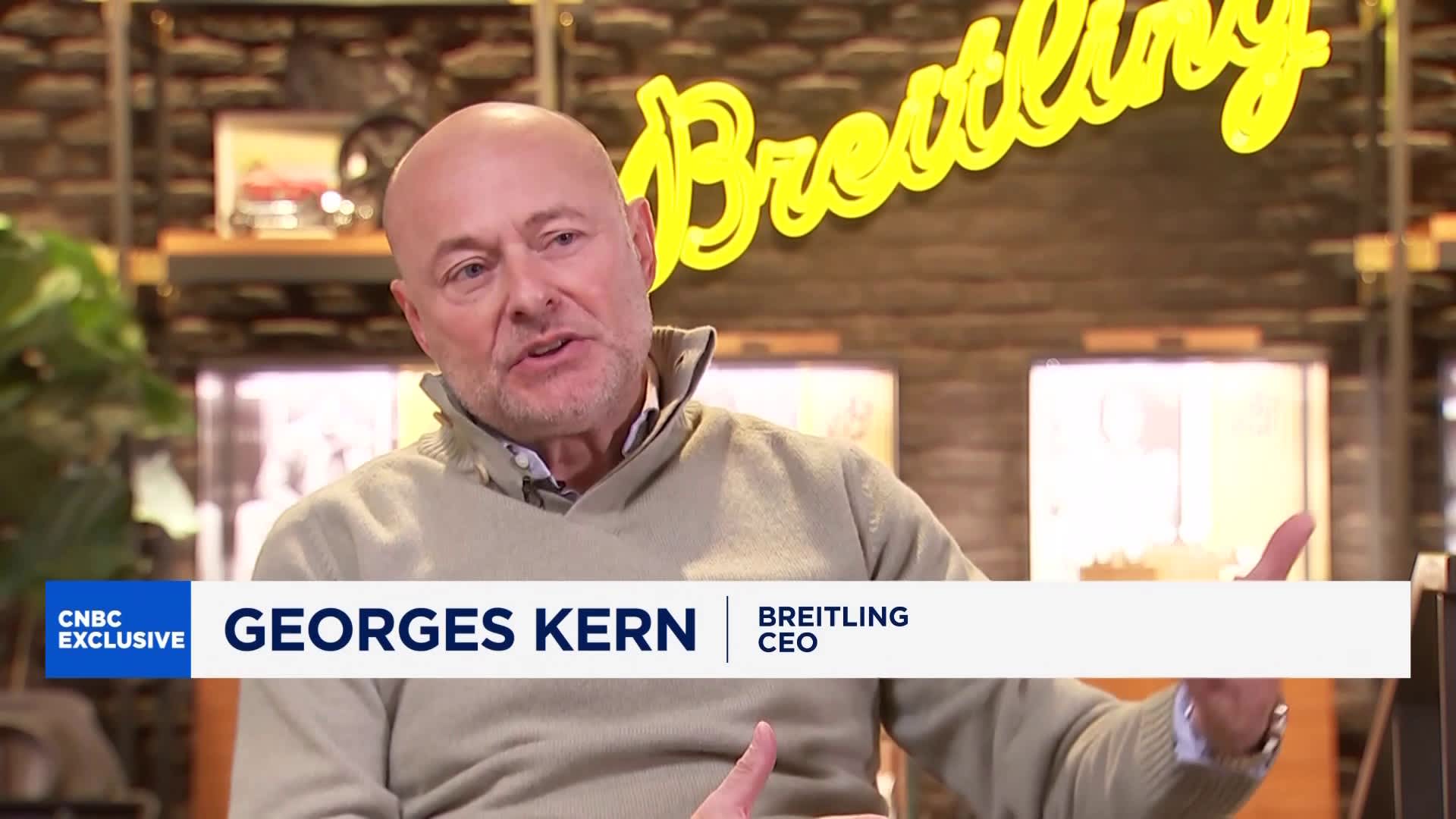
Speaking to CNBC’s Carolin Roth on Wednesday, Georges Kern, CEO of Swiss luxury watchmaker Breitling, labeled the U.S. tariffs “terrible news” for Switzerland.
“39% tariffs is horrible,” he said. “Still, I believe it will be solved. Swiss politicians are really understanding how to deal with businesspeople. The Trump administration, these are businesspeople, these are not classic politicians … But I’m confident that within the next couple of weeks there will be a much better solution than the 39%.”
Kern said that as the tariffs came into effect, Breitling had hiked prices globally to offset the impact, noting that luxury brands had more flexibility in this regard.
“[In] the U.S. we increased prices 4%, but also worldwide to balance the cost of the tariffs because you cannot just increase prices to the consumer by 39%,” he explained. “Thank god we have a certain pricing power at our price point, I don’t think it will impact us dramatically, actually we’re growing.”