A missile is intercepted over Tel Aviv on June 20, 2025, after a Iran fired a fresh salvo of missiles.
John Wessels | Afp | Getty Images
Israel’s stock market is at a record high and has seen the greatest gains of any country in the Middle East over the 22 months of war that began on Oct. 7, 2023.
Israel has been waging multi-front wars, sustaining the mobilization of hundreds of thousands of troops that would ordinarily be part of the workforce, it’s currently facing charges of war crimes in international courts, all while grappling with a large protest movement and political turmoil at home. Despite this, its economic landscape remains buoyant – lifted by significant foreign investment and more recently by renewed investor confidence following its 12-day conflict with Iran.
Initially dropping as much as 23% in the month following the October Hamas attack and Israel’s declaration of war, the Tel Aviv Stock Exchange had rebounded to and exceeded pre-war levels by the first quarter of 2024. As of July 17, the TASE is up over 200% from its Oct. 2023 low.
The country’s GDP for the last quarter of 2023 shrank nearly 20%, following a deep contraction in private consumption and investment triggered by the war. The full year nonetheless finished with modest growth of 2%, and a further 1% GDP growth in 2024, driven mainly by government spending. In June of this year, the OECD forecast 4.9% growth in economic activity for Israel in 2026.
“In 2024, about 161,000 new trading accounts were opened in the Israeli capital market,” a July report published on the Tel Aviv Stock Exchange website stated. That figure represents a threefold jump in the number of accounts opened compared to 2023.
The report added that the first half of 2025 saw a further 87,000 new trading accounts opened, some 33,000 of which were in investment houses.
“The year 2023 was characterized by considerable uncertainty… However, already in 2024, a reversal of the trend could be identified: the public expanded its involvement in the capital market, opened trading accounts, and took advantage of the low price levels in TASE’s indices to enter the local capital market, which also supported the high trading volumes,” Hadar Romano, head of data at TASE, wrote in the report.
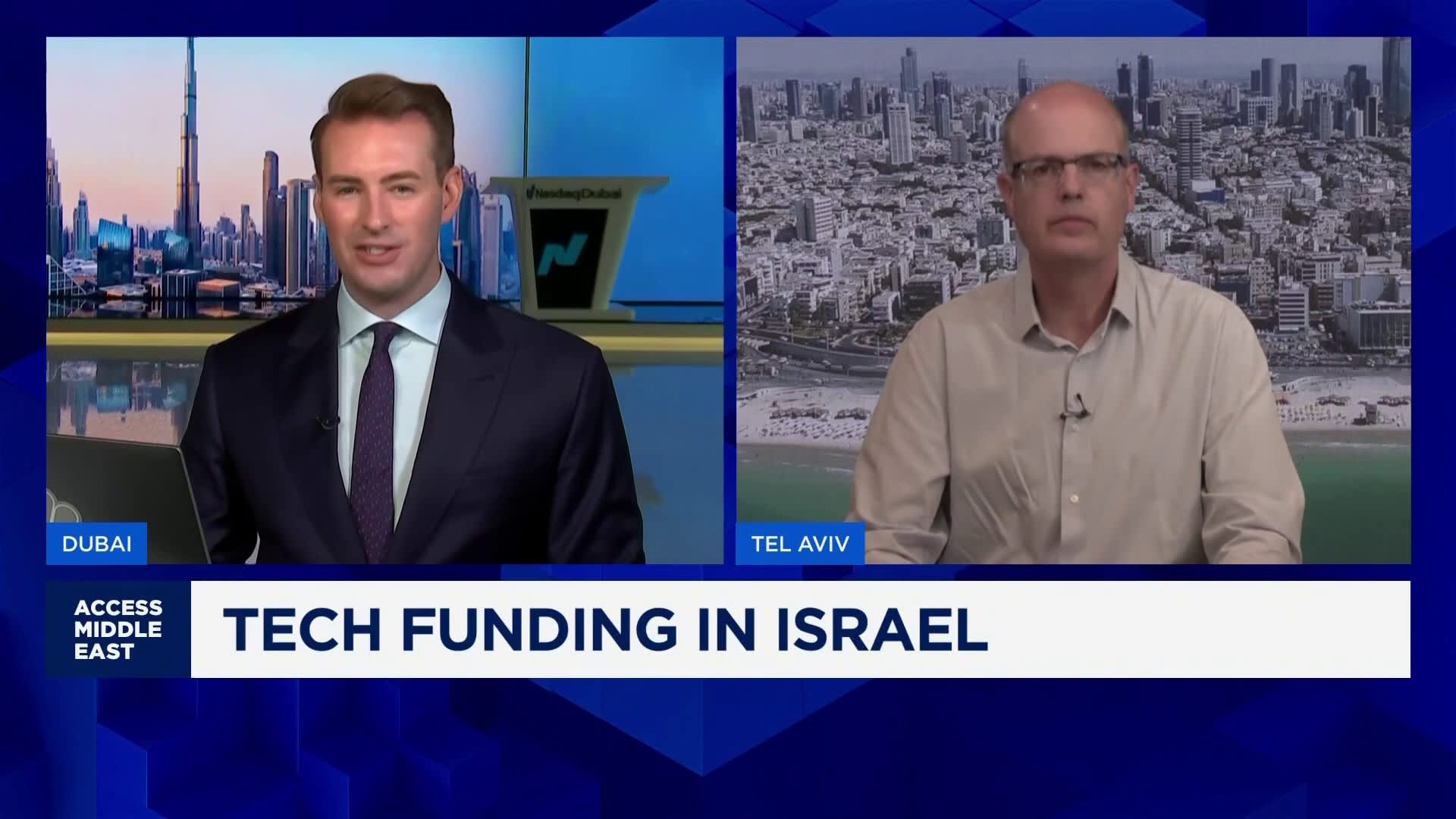
Avi Hasson, CEO of Israel’s Startup Nation Central, credited a number of factors for boosting investor confidence in Israel.
“As a result of what has been happening in the past 22 months, global investors look at the Middle East now, and specifically at Israel, and say… ‘The risks confronting Israel’s security and economy are actually going down’,” Hasson told CNBC’s Access Middle East.
In the last year, Israel has managed to significantly degrade the capabilities of its adversaries, particularly Lebanon’s Hezbollah, and its June conflict with Iran – with the help of the U.S. – was widely seen as having dealt a significant blow to Tehran’s abilities to harm the Jewish state.
When investors “try to look at the fundamentals of the Israeli economy, and more specifically, the tech market, its dynamism, its capabilities, the baby boom, new company creation,” Hasson said, “global investors and global companies are taking notice, when they try to imagine the Middle East. Not necessarily how it is today, but rather in the months and years to come.”

Israel’s tech sector is to thank for much of the country’s economic success. High-tech products and services make up 20% of Israel’s GDP and 56% of its international exports, Hasson said, thanks in part to the government investing heavily into research and development.
Since the start of the war, its defense sector has gained further attention from foreign countries, even in the Arab world – one visible example being the robust presence of Israeli defense firms at Abu Dhabi’s IDEX defense exhibition in February of this year.
Foreign investment has also played a major part in the boost to Israel’s stock market and real estate sector.
In May of this year alone, foreign investors bought approximately 2.5 billion shekels ($743 million) in TASE shares, according to Israeli news outlet Ynet. Since the start of 2025, it reported, total foreign acquisitions have reached roughly 9.1 billion shekels, or $2.7 billion.
And according to Israel’s central bank, outstanding liabilities to foreign investors “increased by approximately $27.5 billion (about 5.2 percent) in the fourth quarter, to about $554 billion at the end of the quarter.” That increase, the bank said, “was primarily due to a combination of an increase in the prices of Israeli securities held by nonresidents and the continued flow of net investments in Israel by nonresidents.”
Primary growth drivers however remain Israel’s domestic institutional investors and its strong savings framework, according to Amy Kaufman, director of investor relations at Israel Investment Advisors.
“High savings rates, especially through Israel’s robust pension system, have provided steady support for the local market. This domestic foundation has been critical in maintaining market stability, particularly during times of heightened geopolitical risk,” she told CNBC.
“Foreign inflows act as an important complement,” Kaufman said, “but the primary growth drivers are Israel’s economic reforms, improved security environment, and the continuing commitment of local capital.”
The Israeli shekel, meanwhile, has gained nearly 7% against the U.S. dollar following the Israel-Iran conflict in June, while S&P Global Market Intelligence expects price inflation in the country to fall within the central bank’s target rate by the third quarter 2025, likely paving the way for further monetary easing.