Kilito Chan | Moment | Getty Images
Electricity prices are rising quickly for U.S. households, even as overall inflation has cooled
Electricity prices rose 4.5% in the past year, according to the consumer price index for May 2025 — nearly double the inflation rate for all goods and services.
The U.S. Energy Information Administration estimated in May that retail electricity prices would outpace inflation through 2026. Prices have already risen faster than the broad inflation rate since 2022, it said.
“It’s a pretty simple story: It’s a story of supply and demand,” said David Hill, executive vice president of energy at the Bipartisan Policy Center and former general counsel at the U.S. Energy Department.
There are many contributing factors, economists and energy experts said.
At a high level, the growth in electricity demand and deactivation of power-generating facilities are outstripping the pace at which new electricity generation is being added to the electric grid, Hill said.
Prices are regional
U.S. consumers spent an average of about $1,760 on electricity in 2023, according to the EIA, which cited federal data from the Bureau of Labor Statistics.
Of course, cost can vary widely based on where consumers live and their electricity consumption. The average U.S. household paid about 17 cents per kilowatt-hour of electricity in March 2025 — but ranged from a low of about 11 cents per kWh in North Dakota to about 41 cents per kWh in Hawaii, according to EIA data.
Households in certain geographies will see their electric bills rise faster than those in others, experts said.
Residential electricity prices in the Pacific, Middle Atlantic and New England regions — areas where consumers already pay much more per kilowatt-hour for electricity — could increase more than the national average, according to the EIA.
“Electricity prices are regionally determined, not globally determined like oil prices,” said Joe Seydl, a senior markets economist at J.P. Morgan Private Bank.
The EIA expects average retail electricity prices to increase 13% from 2022 through 2025.
That means the average household’s annual electricity bill could rise about $219 in 2025 relative to 2022, to about $1,902 from $1,683, according to a CNBC analysis of federal data. That assumes their usage is unchanged.
But prices for Pacific area households will rise 26% over that period, to more than 21 cents per kilowatt-hour, EIA estimates. Meanwhile, households in the West North Central region will see prices increase 8% in that period, to almost 11 cents per kWh.
However, certain electricity trends are happening nationwide, not just regionally, experts said.
Data centers are ‘energy hungry’
The QTS data center complex under development in Fayetteville, Georgia, on Oct. 17, 2024.


Elijah Nouvelage | Bloomberg | Getty Images
Electricity demand growth was “minimal” in recent decades due to increases in energy efficiency, according to Jennifer Curran, senior vice president of planning and operations at Midcontinent Independent System Operator, who testified at a House energy hearing in March. (MISO, a regional electric-grid operator, serves 45 million people across 15 states.)
Meanwhile, U.S. “electrification” swelled via use of electronic devices, smart-home products and electric vehicles, Curran said.
Now, demand is poised to surge in coming years, and data centers are a major contributor, experts said.
Data centers are vast warehouses of computer servers and other IT equipment that power cloud computing, artificial intelligence and other tech applications.
More from Personal Finance:
How to protect financial assets amid immigration raids, deportation worries
GOP education plan may trigger ‘avalanche of student loan defaults’
This credit card behavior is an under-the-radar risk
Data center electricity use tripled to 176 Terawatt-hours in the decade through 2023, according to the U.S. Energy Department. Use is projected to double or triple by 2028, the agency said.
Data centers are expected to consume up to 12% of total U.S. electricity by 2028, up from 4.4% in 2023, the Energy Department said.
They’re “energy hungry,” Curran said. Demand growth has been “unexpected” and largely due to support for artificial intelligence, she said.
The U.S. economy is set to consume more electricity in 2030 for processing data than for manufacturing all energy-intensive goods combined, including aluminum, steel, cement and chemicals, according to the International Energy Agency.
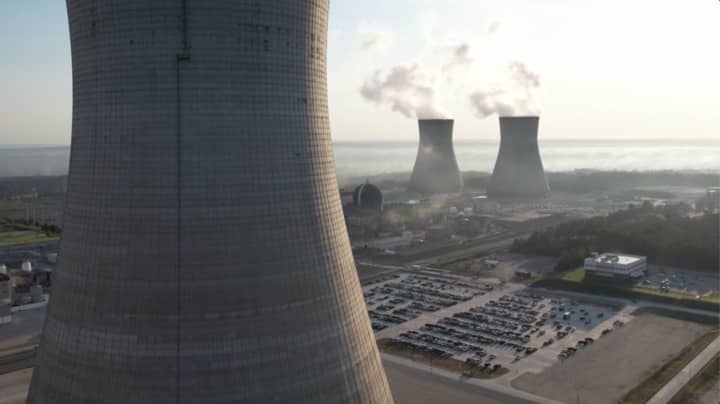
Continued electrification among businesses and households is expected to raise electricity demand, too, experts said.
The U.S. has moved away from fossil fuels like coal, oil and natural gas to reduce planet-warming greenhouse-gas emissions.
For example, more households may use electric vehicles rather than gasoline-powered cars or electric heat pumps versus a gas furnace — which are more efficient technologies but raise overall demand on the electric grid, experts said.
Population growth and cryptocurrency mining, another power-intensive activity, are also contributors, said BPC’s Hill.
‘All about infrastructure’
Thianchai Sitthikongsak | Moment | Getty Images
As electricity demand is rising, the U.S. is also having problems relative to transmission and distribution of power, said Seydl of J.P. Morgan.
Rising electricity prices are “all about infrastructure at this point,” he said. “The grid is aged.”
For example, transmission line growth is “stuck in a rut” and “way below” Energy Department targets for 2030 and 2035, Michael Cembalest, chairman of market and investment Strategy for J.P. Morgan Asset & Wealth Management, wrote in a March energy report.
Shortages of transformer equipment — which step voltages up and down across the U.S. grid — pose another obstacle, Cembalest wrote. Delivery times are about two to three years, up from about four to six weeks in 2019, he wrote.
“Half of all US transformers are near the end of their useful lives and will need replacing, along with replacements in areas affected by hurricanes, floods and wildfires,” Cembalest wrote.
Transformers and other transmission equipment have experienced the second highest inflation rate among all wholesale goods in the US since 2018, he wrote.
Meanwhile, certain facilities like old fossil-fuel powered plants have been decommissioned and new energy capacity to replace it has been relatively slow to come online, said BPC’s Hill. There has also been inflation in prices for equipment and labor, so it costs more to build facilities, he said.