Jamie Dimon, CEO of JPMorgan Chase, testifies during the Senate Banking, Housing and Urban Affairs Committee hearing titled Annual Oversight of Wall Street Firms, in the Hart Building on Dec. 6, 2023.
Tom Williams | Cq-roll Call, Inc. | Getty Images
The more Jamie Dimon worries, the better his bank seems to do.
As JPMorgan Chase has grown larger, more profitable and increasingly more crucial to the U.S. economy in recent years, its star CEO has grown more vocal about what could go wrong — all while things keep going right for his bank.
In the best of times and in the worst of times, Dimon’s public outlook is grim.
Whether it’s his 2022 forecast for a “hurricane” hitting the U.S. economy, his concerns over the fraying post-World War II world order or his caution about America getting hit by a one-two punch of recession and inflation, Dimon seems to lace every earnings report, TV appearance and investor event with another dire warning.
“His track record of leading the bank is incredible,” said Ben Mackovak, a board member of four banks and investor through his firm Strategic Value Bank Partner. “His track record of making economic-calamity predictions, not as good.”
Over his two decades running JPMorgan, Dimon, 69, has helped build a financial institution unlike any the world has seen.
A sprawling giant in both Main Street banking and Wall Street high finance, Dimon’s bank is, in his own words, an end-game winner when it comes to money. It has more branches, deposits and online users than any peer and is a leading credit card and small business franchise. It has a top market share in both trading and investment banking, and more than $10 trillion moves over its global payment rails daily.
‘Warning shot’
A review of 20 years of Dimon’s annual investor letters and his public statements show a distinct evolution. He became CEO in 2006, and his first decade at the helm of JPMorgan was consumed by the U.S. housing bubble, the 2008 financial crisis and its long aftermath, including the acquisition of two failed rivals, Bear Stearns and Washington Mutual.
By the time he began his second decade leading JPMorgan, however, just as the legal hangover from the mortgage crisis began to fade, Dimon began seeing new storm clouds on the horizon.
“There will be another crisis,” he wrote in his April 2015 CEO letter, musing on potential triggers and pointing out that recent gyrations in U.S. debt were a “warning shot” for markets.
That passage marked the start of more frequent financial warnings from Dimon, including worries of a recession — which didn’t happen until the 2020 pandemic triggered a two-month contraction — as well as concerns around market meltdowns and the ballooning U.S. deficit.
But it also marked a decade in which JPMorgan’s performance began lapping rivals.
After leveling out at roughly $20 billion in annual profit for a few years, the sprawling machine that Dimon oversaw began to truly hit its stride. JPMorgan generated seven record annual profits from 2015 to 2024, over twice as many as in Dimon’s first decade as CEO.
In that time, investors began aggressively bidding up JPMorgan’s shares, buying into the idea that it was a growth company in an otherwise boring sector. JPMorgan is now the world’s most valuable publicly traded financial firm and is spending $18 billion annually on technology, including artificial intelligence, to stay that way.
While Dimon seems perpetually worried about the economy and rising geopolitical turmoil, the U.S. keeps chugging along. That means unemployment and consumer spending has been more resilient than expected, allowing JPMorgan to churn out record profits.

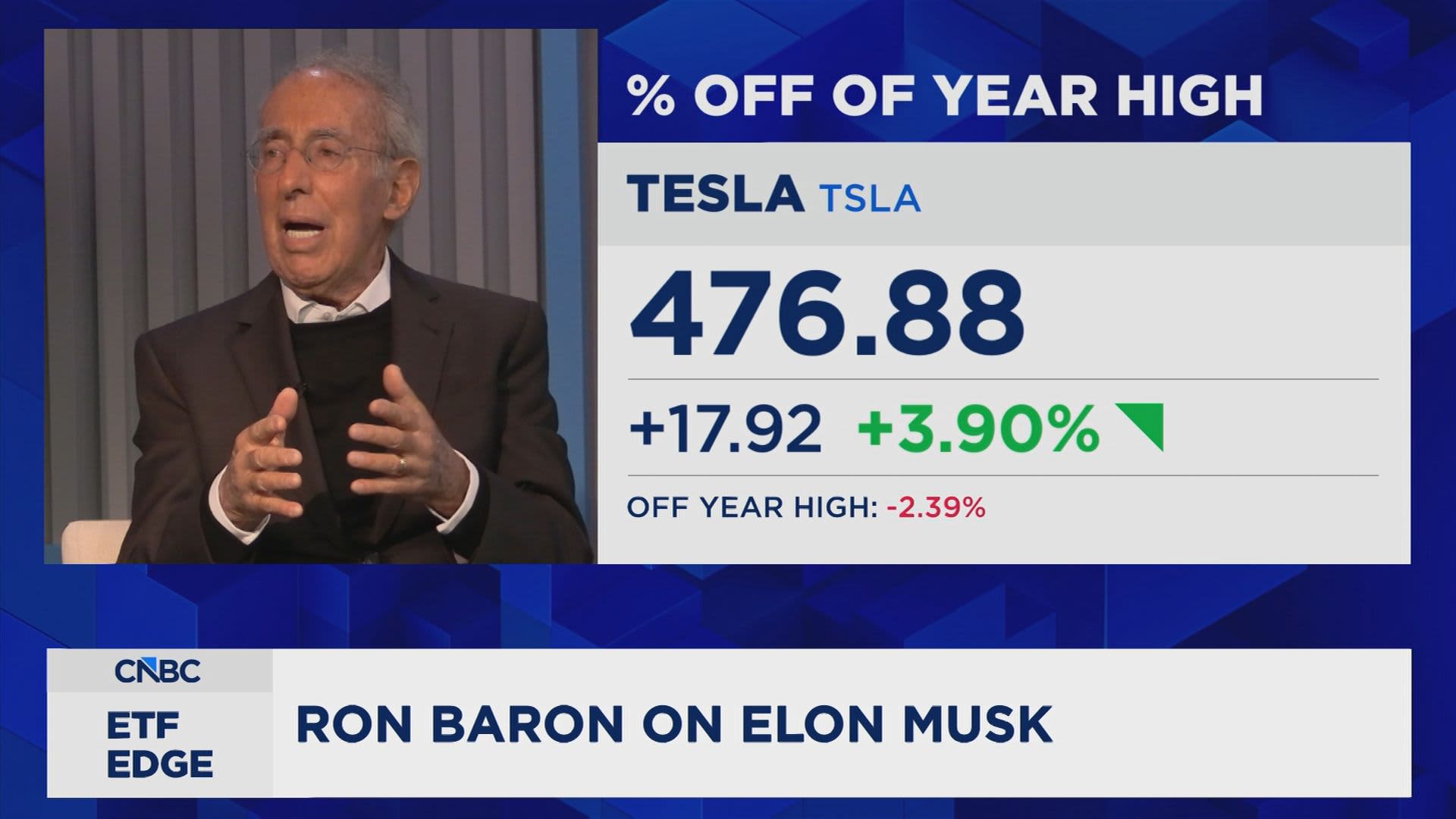
In 2022, Dimon told a roomful of professional investors to prepare for an economic storm: “Right now, it’s kind of sunny, things are doing fine, everyone thinks the Fed can handle this,” Dimon said, referring to the Federal Reserve managing the post-pandemic economy.
“That hurricane is right out there, down the road, coming our way,” he said.
“This may be the most dangerous time the world has seen in decades,” Dimon said the following year in an earnings release.
But investors who listened to Dimon and made their portfolios more conservative would have missed out on the best two-year run for the S&P 500 in decades.
‘You look stupid’
“It’s an interesting contradiction, no doubt,” Mackovak said about Dimon’s downbeat remarks and his bank’s performance.
“Part of it could just be the brand-building of Jamie Dimon,” the investor said. “Or having a win-win narrative where if something goes bad, you can say, ‘Oh, I called it,’ and if doesn’t, well your bank’s still chugging along.”
According to the former president of a top five U.S. financial institution, bankers know that it’s wiser to broadcast caution than optimism. Former Citigroup CEO Chuck Prince, for example, is best known for his ill-fated 2007 comment about the mortgage business that “as long as the music is playing, you’ve got to get up and dance.”
“One learns that there’s a lot more downside to your reputation if you are overly optimistic and things go wrong,” said the former president, who asked to remain anonymous to discuss Dimon. “It’s damaging to your bank, and you look stupid, whereas the other way around, you just look like you’re being a very cautious, thoughtful banker.”
Banking is ultimately a business of calculated risks, and its CEOs have to be attuned to the downside, to the possibility that they don’t get repaid on their loans, said banking analyst Mike Mayo of Wells Fargo.
“It’s the old cliche that a good banker carries an umbrella when the sun is shining; they’re always looking around the corner, always aware of what could go wrong,” Mayo said.
But other longtime Dimon watchers see something else.
Dimon has an “ulterior motive” for his public comments, according to Portales Partners analyst Charles Peabody.
“I think this rhetoric is to keep his management team focused on future risks, whether they happen or not,” Peabody said. “With a high-performing, high-growth franchise, he’s trying to prevent them from becoming complacent, so I think he’s ingrained in their culture a constant war room-type atmosphere.”
Dimon has no shortage of things to worry about these days, despite the fact that his bank generated a record $58.5 billion in profit last year. Conflicts in Ukraine and Gaza rage on, the U.S. national debt grows, and President Donald Trump‘s trade policies continue to jolt adversaries and allies alike.
Graveyard of bank logos
“It’s fair to observe that he’s not omniscient and not everything he says comes true,” said Truist bank analyst Brian Foran. “He comes at it more from a perspective that you need to be prepared for X, as opposed to we’re convinced X is going to happen.”
JPMorgan was better positioned for higher interest rates than most of its peers were in 2023, when rates surged and punished those who held low-yielding long-term bonds, Foran noted.
“For many years, he said, ‘Be prepared for the 10-year at 5%, and we all thought he was crazy, because it was like 1% at the time,” Foran said. “Turns out that being prepared was not a bad thing.”
Perhaps the best explanation for Dimon’s dour outlook is that, no matter how big and powerful JPMorgan is, financial companies can be fragile. The history of finance is one of the rise and fall of institutions, sometimes when managers become complacent or greedy.
In fact, the graveyard of bank logos that are no longer used includes three — Bear Stearns, Washington Mutual and First Republic — that have been subsumed by JPMorgan.
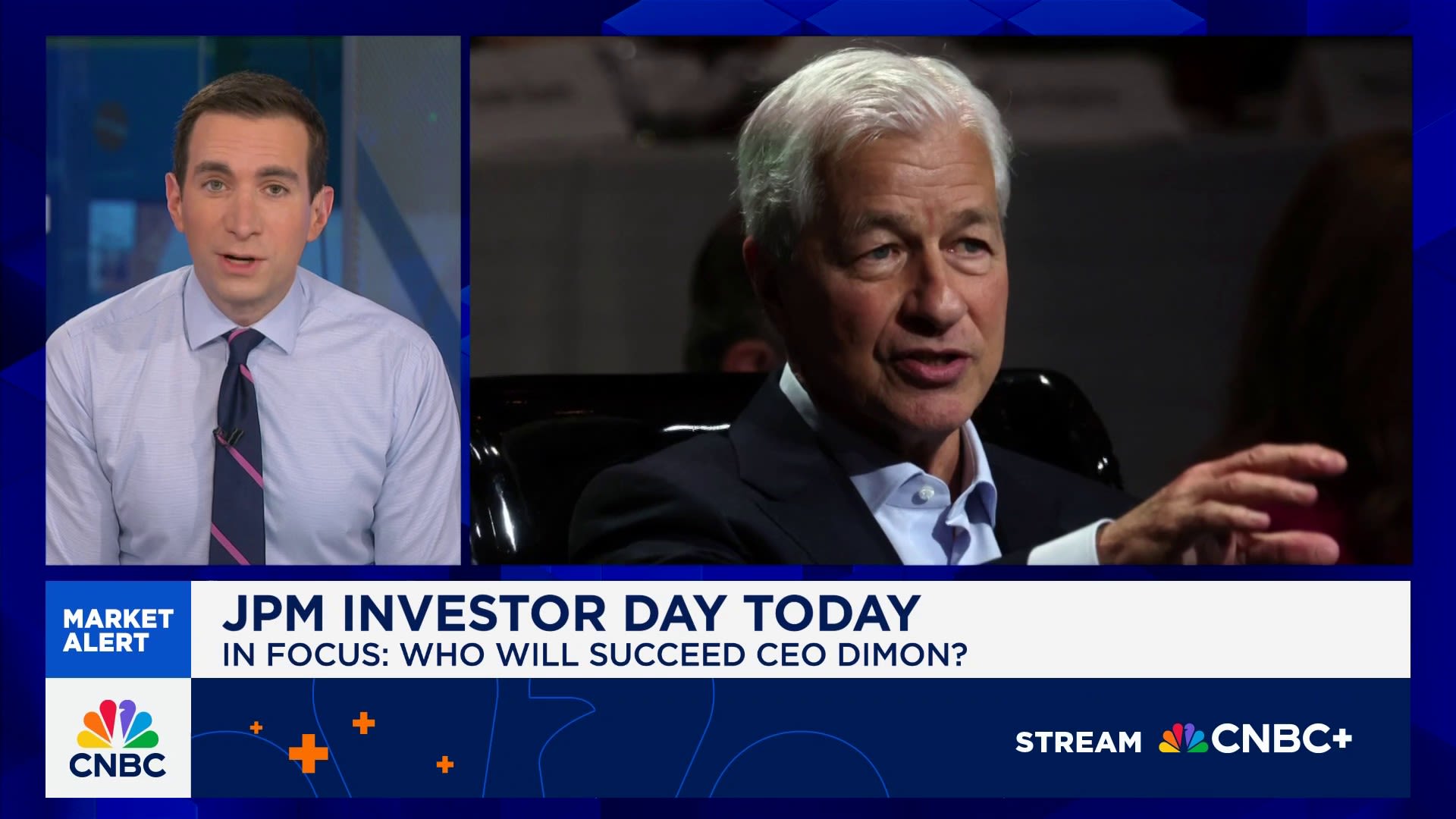
During his bank’s investor day meeting this month, Dimon pointed out that, in the past decade, JPMorgan has been one of the only firms to earn annual returns of more than 17%.
“If you go back to the 10 years before that, OK, a lot of people earned over 17%,” Dimon said. “Almost every single one went bankrupt. Hear what I just said?”
“Almost every single major financial company in the world almost didn’t make it,” he said. “It’s a rough world out there.”