Textile manufacturing workers in Binzhou, Shandong, China, on April 23, 2025.
Nurphoto | Nurphoto | Getty Images
BEIJING — Chinese manufacturers are pausing production and turning to new markets as the impact of U.S. tariffs sets in, according to companies and analysts.
The lost orders are also hitting jobs.
“I know several factories that have told half of their employees to go home for a few weeks and stopped most of their production,” said Cameron Johnson, Shanghai-based senior partner at consulting firm Tidalwave Solutions. He said factories making toys, sporting goods and low-cost Dollar Store-type goods are the most affected right now.
“While not large-scale yet, it is happening in the key [export] hubs of Yiwu and Dongguan and there is concern that it will grow,” Johnson said. “There is a hope that tariffs will be lowered so orders can resume, but in the meantime companies are furloughing employees and idling some production.”
Around 10 million to 20 million workers in China are involved with U.S.-bound export businesses, according to Goldman Sachs estimates. The official number of workers in China’s cities last year was 473.45 million.
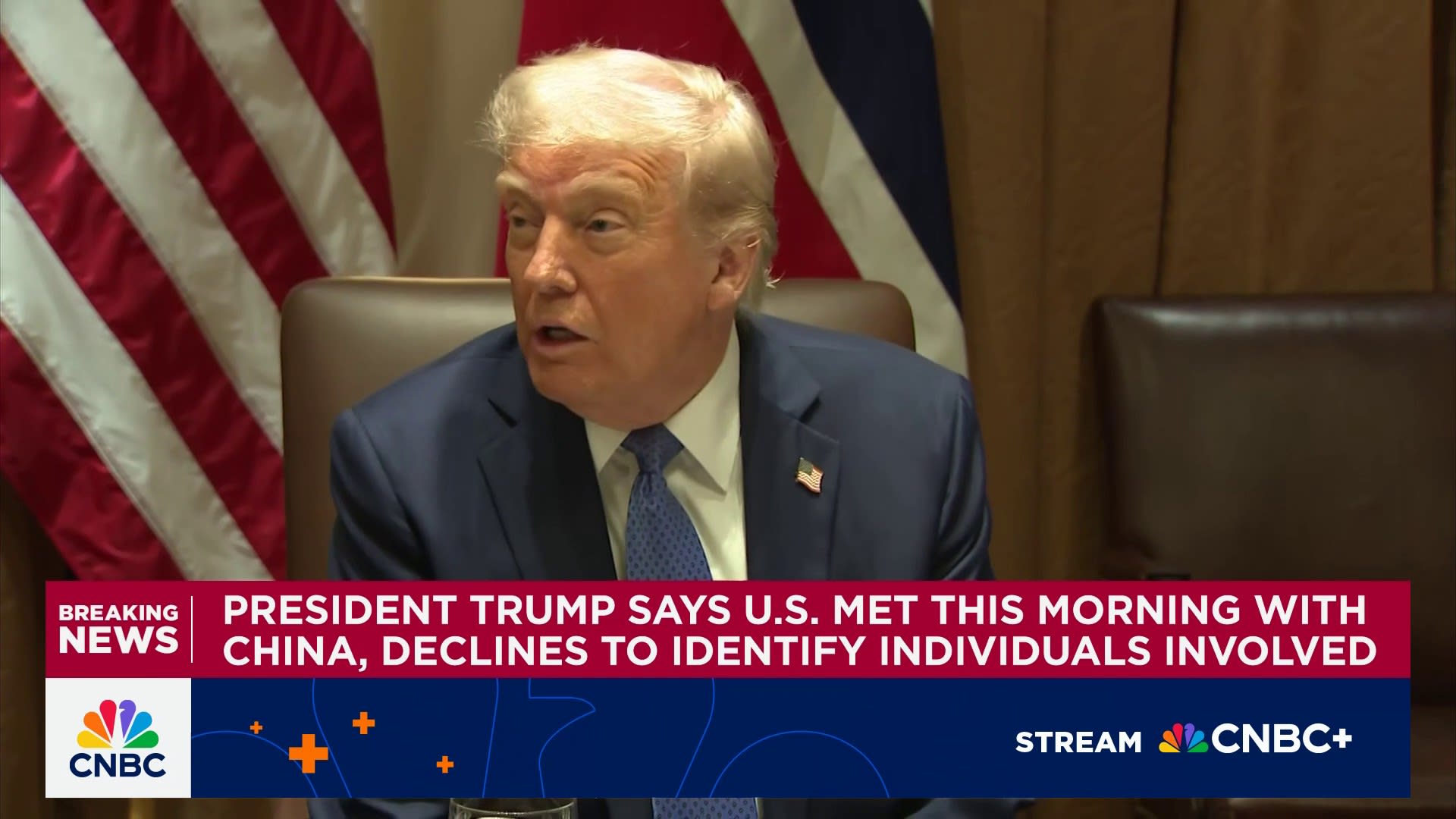
Over a series of swift announcements this month, the U.S. added more than 100% in tariffs to Chinese goods, to which China retaliated with reciprocal duties. While U.S. President Donald Trump on Thursday asserted trade talks with Beijing were underway, the Chinese side has denied any negotiations are ongoing.
The impact of the recent doubling in tariffs is “way bigger” than that of the Covid-19 pandemic, said Ash Monga, founder and CEO of Guangzhou-based Imex Sourcing Services, a supply chain management company. He noted that for small businesses with only several million dollars in resources, the sudden increase in tariffs might be unbearable and could put them out of business.
He said there’s so much demand from clients and other importers of Chinese products that he’s launching a new “Tariff Help” website on Friday to help small business find suppliers based outside China.
Livestreaming
The business disruption is forcing Chinese exporters to try new sales strategies.
Woodswool, an athleticwear manufacturer based in Ningbo, near Shanghai, quickly turned to selling the clothes online in China via livestreaming. After launching the sales channel about a week ago, the company said it’s received more than 30 orders with gross merchandise value of more than 5,000 yuan ($690).



It’s a small step toward salvaging lost business.
“All our U.S. orders have been canceled,” Li Yan, factory manager and brand director of Woodswool, said in Mandarin, translated by CNBC.
More than half of production once went to the U.S., and some capacity will be idle for two to three months until the company is able to build up new markets, Li said. He noted the company has sold to customers in Europe, Australia and the U.S. for more than 20 years.
The venture into livestreaming is part of an effort by major Chinese tech companies, at the behest of Beijing, to help exporters redirect their goods to the domestic market.
Woodswool is selling its products online through Baidu, whose search engine app also includes a livestreaming e-commerce platform. Li said he chose the company’s virtual human livestreaming option since it allowed him to get up and running within two weeks, without having to spend time and money on renovating a studio and hiring a team.
Baidu said it has worked with at least several hundred Chinese businesses to launch domestic e-commerce channels after this month announcing it would provide subsidies and free artificial intelligence tools — such as its “Huiboxing” virtual humans — for 1 million businesses. The virtual humans are digitally recreated versions of people that use AI to mimic sales pitches and automate interactions with customers. The company claimed that return on investment was higher than that of using a human being.
Domestic market challenges
E-commerce company JD.com was one of the first to announce similar support, pledging 200 billion yuan ($27.22 billion) to buy Chinese goods originally intended for export — and find ways to sell them within China. Food delivery company Meituan has also announced it would help exporters distribute domestically, without specifying an amount.
However, $27.22 billion is only 5% of the $524.66 billion in goods that China exported to the U.S. last year.
“A few businesses have told us that under 125% tariffs, their business model is not workable,” Michael Hart, president of the American Chamber of Commerce in China, told reporters Friday. He also noted more competition among Chinese companies in the last week.
Tariffs from both countries will likely remain in place at a certain level, with exemptions for certain tariffs, Hart said. “That’s exactly what they’re backing into.”
Products branded and developed for a suburban U.S. consumer might not directly work for a Chinese apartment dweller.
Manufacturers have gone directly to Chinese social media platforms Red Note and Douyin, the local version of TikTok, to ask consumers to support them, but fatigue is growing, pointed out Ashley Dudarenok, founder of ChoZan, a China marketing consultancy.
Looking outside the U.S.
Fewer and fewer Chinese companies are considering diverting exports to the U.S. through other countries, given rising U.S. scrutiny of transshipments, she said. Dudarenok added that many companies are diversifying production to India over Southeast Asia, while others are turning from U.S. customers to those in Europe and Latin America.
Some companies have already built businesses on other trade routes from China.
Liu Xu runs an e-commerce company called Beijing Mingyuchu that sells bathroom products to Brazil. While his business has run into challenges from fluctuating exchange rates and high container shipping costs, Liu said he expects trade with Brazil will ultimately not be that affected by China’s tensions with the U.S.
China’s exports to Brazil have doubled between 2018 and 2024, as have China’s exports to Ghana.
During the Covid-19 pandemic, Ghana-based Cotrie Logistics was founded to help businesses with sourcing, coordinate shipments amid port delays and build dependable logistics routes, said CEO Bright Tordzroh. The company primarily works in trade between China and Ghana and now makes $300,000 to $1 million annually, he said.
The U.S.-China trade tensions have led many companies to explore sourcing and manufacturing locations outside the United States, Tordzroh said, which he hopes can create more opportunities for Cotrie.

Subscribe now