U.S. President Donald Trump with Mohammed bin Salman, crown prince of Saudi Arabia, at the start of the Group of 20 summit on 28 June 2019.
Bernd von Jutrczenka | picture alliance | Getty Images
DUBAI, United Arab Emirates — The wealthy Arab Gulf states are in a better position than many other regions of the world to manage the economic impact of U.S. President Donald Trump’s tariffs, economists and regional investors say. But a shaky outlook for the price of oil could put some countries’ budgets and spending projects at risk.
Saudi Arabia, the United Arab Emirates, Bahrain, Kuwait, Oman, and Qatar make up the Gulf Cooperation Council. Together, they comprise around $3.2 trillion in sovereign financial assets, accounting for 33% of the total sovereign assets worldwide, according to GCC Secretary-General Jasem Mohamed Albudaiwi.
The GCC also holds approximately 32.6% of the world’s proven crude oil reserves, according to the Statistical Center of the Cooperation Council for the Arab States of the Gulf.
That makes it both an asset for the Trump administration as well as vulnerable to its policies, as Trump has long pushed for OPEC, the oil producer alliance led by Saudi Arabia, to pump more oil to help lower oil prices and offset inflation in the U.S.

A lower oil price, however, can significantly impact the budget deficits and spending plans for those countries, whose economies — despite diversification efforts — still rely heavily on hydrocarbon revenues.
Beneficial relations with Trump
Ben Powell, BlackRock’s chief investment strategist for Asia-Pacific and the Middle East, who is based in Abu Dhabi, said the region’s warm relations with Trump strengthens its hand when it comes to potential tariff negotiations. Some GCC countries have also expanded their role in global diplomacy. One example is Riyadh’s hosting of peace talks to end the Russia-Ukraine war, which has made it ever more important to Washington.
“I do think the Middle East, with the deep relationship with the U.S. that they have, should come out okay,” Powell told CNBC’s “Access Middle East” on Monday.
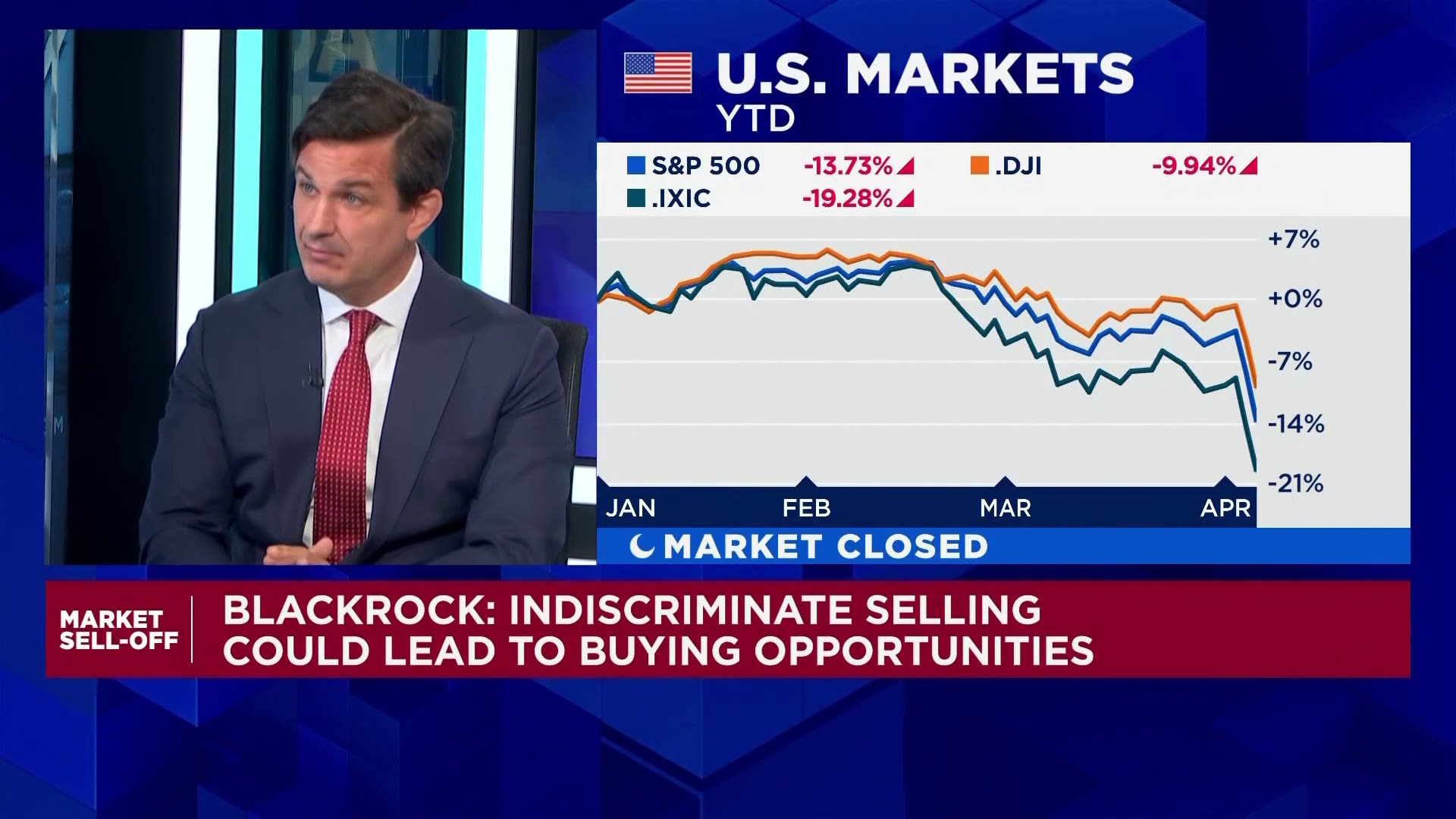
“I think we’re all going to be swept into the maelstrom over the next short period of time. That’s inevitable. But the Middle East, with the balance sheet strength that they have, with the energy support that they still have, providing funding on a near ongoing basis … for me, the Middle East — maybe not today, but over time — should be a relative winner within that mix” when it comes to emerging markets, Powell said.
In considering what the firsthand impact of tariffs might be, Monica Malik, chief economist at Abu Dhabi Commercial Bank, noted that the U.S. is not a major export market for the Gulf.
“The GCC should be in a relatively favourable position to withstand headwinds, especially the UAE,” she wrote in a report for the bank on Friday.
While the region faces the blanket 10% universal tariff as well as previously imposed tariffs on all foreign steel and aluminum — products that the UAE and Bahrain both export — “we expect the direct impact to be relatively contained, as the US is not a key destination for Gulf exports, averaging just c.3.7% of the GCC’s total exports in 2024,” she said.
Threat to spending plans
But the oil price outlook is critical for Gulf states’ budgets and future spending plans — particularly for Saudi Arabia, which has embarked on trillions of dollars worth of ambitious mega-projects as part of Vision 2030, Crown Prince Mohammed bin Salman’s sweeping initiative to diversify the kingdom’s economy away from oil. The success of the plan, perhaps ironically, relies heavily on oil revenues.
Global benchmark Brent crude was trading at $61.44 per barrel on Wednesday at 8:30 a.m. in London, down nearly 17% year-to-date. Additional pressure was put on the price after OPEC+, the oil producer alliance led by Saudi Arabia and Russia, made a surprise decision to accelerate planned crude production hikes, further bolstering global supply.
Saudi Arabia needs oil at more than $90 a barrel to balance its budget, the International Monetary Fund estimates. Goldman Sachs this week lowered its oil price forecast for 2026 to $58 for Brent and $55 for U.S. benchmark WTI crude. That’s a significant move lower from its forecast just last Friday of $62 for Brent and $59 for WTI in 2026.
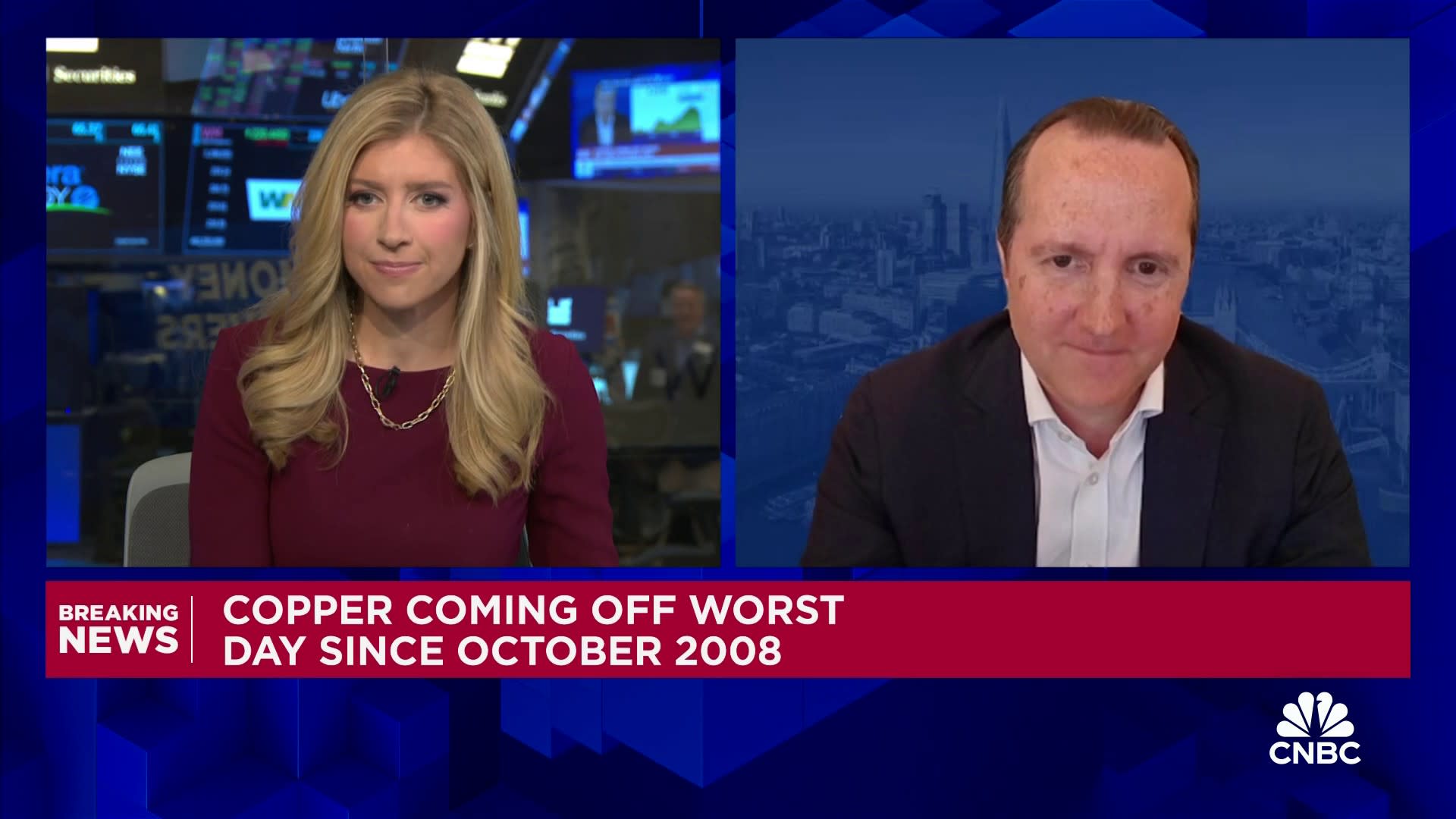
“A weaker global demand and greater supply adds downside risk to our Brent forecast for 2025, though we wait for more market clarity before making any changes,” ADCB’s Malik told CNBC on Monday. OPEC+ is meant to increase oil production levels again in May, and she predicts the group will pause that plan if crude prices stay where they are or fall further.
“Our greatest concern would be a sharp and sustained oil price fall, which would require a reassessment of spending plans – government and off budget – including capex, while also potentially affecting banking sector liquidity and wider confidence,” Malik warned.