Arseniy45 | Istock | Getty Images
President Donald Trump may hope his tariffs jump-start a renaissance in manufacturing in the United States, but the reality is not so simple, according to experts.
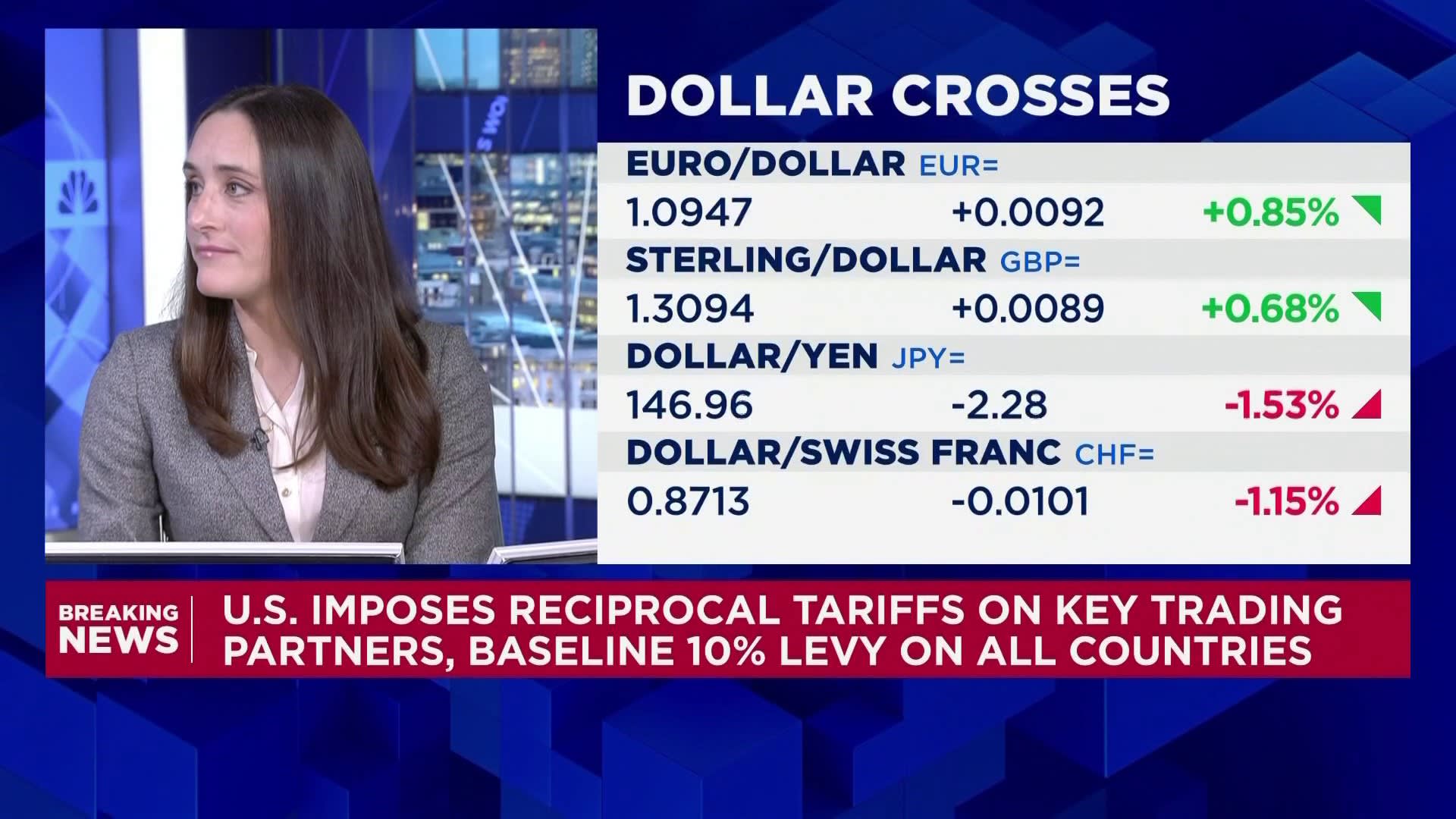
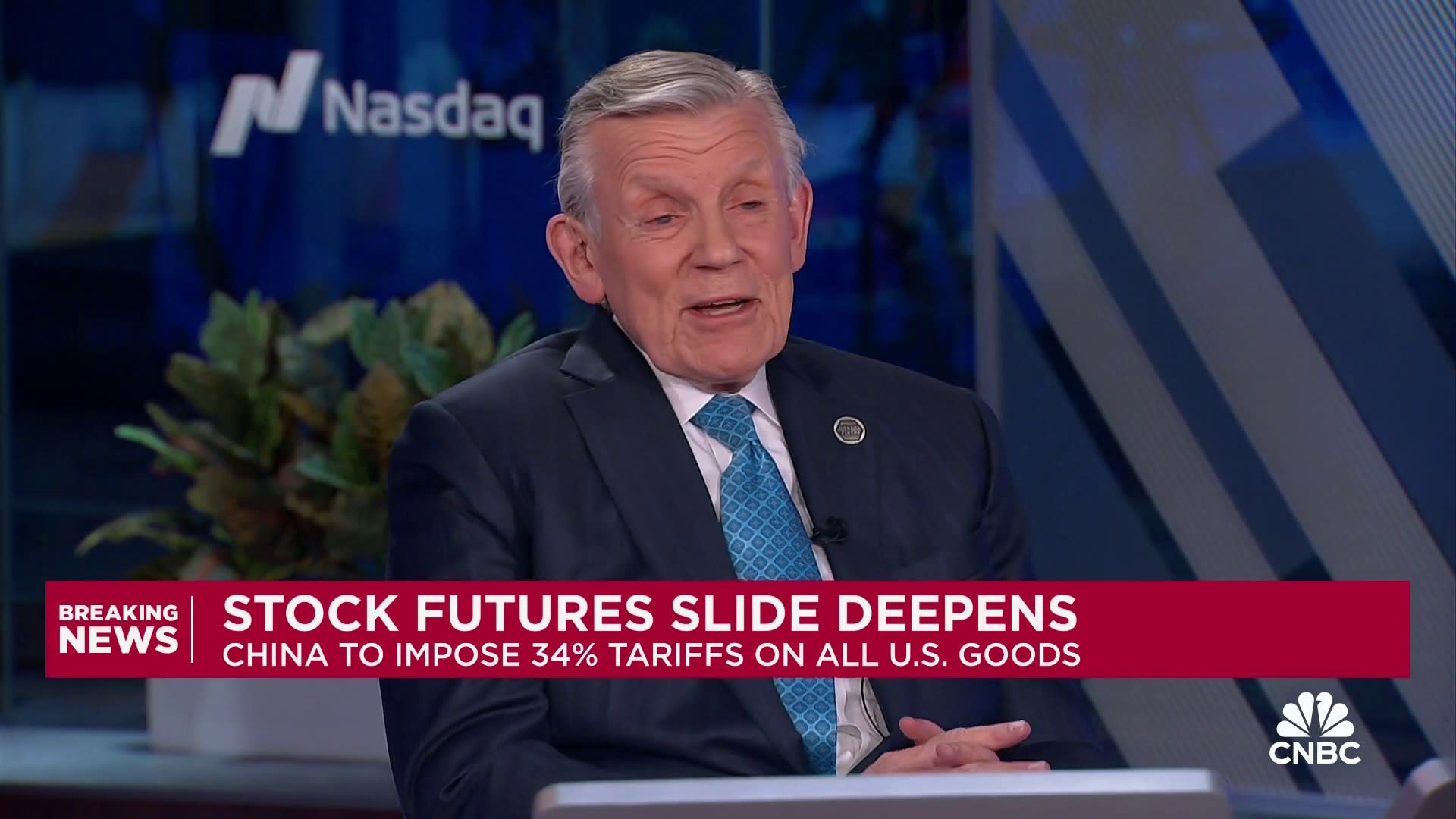
The president announced sweeping tariffs Wednesday, including a baseline 10% levy across the board on all imports. He also targeted specific countries with steep tariffs, such as 34% on China, 20% on the European Union and 46% on Taiwan.
Trump said “jobs and factories will come roaring back.”
“We will supercharge our domestic industrial base, we will pry open foreign markets and break down foreign trade barriers and ultimately more production at home will mean stronger competition and lower prices for consumers,” he said during his news conference.
The U.S. has lost about 6 million jobs over the last four or five decades as companies moved operations overseas, largely because business could be done cheaper elsewhere, said Harry Moser, president of the nonprofit Reshoring Initiative.
He said the tariffs are a good start to overcoming that problem but that dealing with a strong dollar and building up the workforce is the best solution.
Moser said he would have preferred lower levies than those Trump announced.
“Smaller would be easier to defend, but still enough to drive reshoring and FDI [foreign direct investment] in excess of our ability to build and staff factories,” he said.
He said he expects Trump’s initial salvos to result in negotiations.
“As long as he convinces the other countries that he will keep attacking the problem until it’s solved, then they will come forward and maybe let their currency go up a little bit,” Moser said. “Maybe they’ll lower their tariff barriers to our products. Maybe they’ll encourage their companies to put factories here in the United States.”
Businesses expected to ‘proceed cautiously’
Still, there are a number of issues to overcome to bring companies back to the United States, including uncertainty around the tariffs and how long they will stay in place, experts said.
“Given the unpredictable nature of the path forward and the long lead times to build industrial capacity, we expect most businesses to proceed cautiously following this announcement,” Edward Mills, Raymond James’ Washington policy analyst, said in a note Wednesday. “New capacity can be added where feasible, but without certainty on longer-term policy, larger investments are more difficult.”
“These are investments, and as a businessman you’ve got to justify them and rationalize it,” said Panos Kouvelis, professor of supply chain, operations and technology at Washington University in St. Louis. “If there’s significant uncertainty, you might make some investments, but rather conservative, because you would like to see how it’s going to play out.”
Kouvelis’ research on Trump’s 2018 targeted tariffs found that they did not have a big impact on reshoring or the return of jobs to the U.S. He said there was a negative effect for manufacturers, who had to pay more for raw materials, with reduced demand and capacity in some cases. Finished goods was a mixed story, depending on demand, he said.
The latest levies are seen as “fluid and fickle” because they are based on executive orders from the president and were not done through Congress, said Christopher Tang, distinguished professor at the UCLA Anderson School of Management.
Unless we solve the crisis of confidence, the potential investments, the announced investments will not happen at a fast pace. It will slow down.
Manish Kabra
Societe Generale’s head of U.S. equity strategy
“A lot of companies, then, are not sure really how to redesign the supply chain when the trade policy is unclear, and also what happens four years down the road,” Tang said. “So because these are many, many billions of dollars in investments, they cannot change on a lurch.”
Morgan Stanley analyst Chris Snyder said he thinks tariffs are a “positive catalyst” for reshoring but that he doesn’t expect a massive wave of projects returning to the U.S. in the near term. Right now, he expects small, quick turnaround investments that could boost output by about 2%, he said.
“When we talk to corporations, there is a lot of uncertainty about what policy will be in three months,” he said.
In addition, consumer confidence has taken a hit — and that will be a factor in business’ decisions on whether and when they will reshore, said Manish Kabra, Societe Generale’s head of U.S. equity strategy. The Conference Board’s monthly consumer confidence index hit a 12-year low in March.
“When you have crisis of confidence, the confidence of global companies that have announced investments in the U.S., they are going to pause,” Kabra said. “Unless we solve the crisis of confidence, the potential investments, the announced investments will not happen at a fast pace. It will slow down.”
Rushing reshoring could be ‘dangerous’


A lot needs to happen before manufacturing can really ramp back up again in the U.S., experts said.
“The United States is not ready to reshore. We don’t have the infrastructure, we don’t have enough workers, and also, we need to examine how many Americans are willing to work in the factory,” Tang said. “If you rush it, it could be rather risky and dangerous.”
He said he expects some companies to return as a result of Trump’s tariffs but that there are still a lot of barriers for many. Executives are under pressure to show short-term results in quarterly earnings, he said, and managing an American workforce can be complicated.
“There’s so many regulations, so many laws, and also the cost is quite high, so the incentive for them to come back is not high,” Tang said.
There also needs to be a significant investment in training America’s workforce, Moser said.
Trump’s tariff program “will fail unless the nation commits to a vastly increased recruiting and training program for skilled manufacturing workers and engineers,” he said. “We need to go from ‘College for all’ to ‘A great career for all.'”
Morgan Stanley’s Snyder said he believes when companies are ready to build their next project, they will now be more likely to turn to the U.S.
“The U.S. is in the best position to get the incremental factories than it has been in the last 50 years,” he said. Plus, the wave of manufacturing starts that has occurred since the pandemic has stalled and the tariffs will give them more urgency to finish, he said.
What could be reshored
Companies have announced investments worth $1.4 trillion since the election, according to Societe Generale’s Kabra. That adds up to about 200,000 new jobs, he said.
Hyundai tops the list with its $21 billion dollar investment in U.S. facilities, including a $5.8 billion plant in Louisiana.
Automobile makers are likely among the industries that will reshore, experts said. Trump imposed a 25% tariff on imported cars and has also vowed to tax key auto parts.
Manufacturers of gas-powered cars will have to weigh their options, since they already have a very streamlined supply chain, said University of Washington’s Kouvelis.
“The gas-powered car industry is in trouble with hard-to-adjust supply chains and not enough incentive to do it,” he said.
Electric vehicles are a different story, because they have fewer parts, the battery being the most important, so those companies are more likely to shift operations, he said.
“Everybody understands the U.S. market is lucrative to lose, and the competitors with an advantage [such as Chinese companies] more or less are kept out,” Kouvelis said.
Snyder also said that EVs are among those likely to come to the U.S., but because they will need more capacity. His thesis is that industries that need to expand — rather than close up shop in another country and move — will be the ones that return to the U.S. That includes industrial equipment and semiconductors, he said.
While semiconductors and pharmaceuticals were exempt from the tariffs, they may still be targeted at a later date. Experts said they expect both industries to reshore.
Semiconductor manufacturers got the incentive to return after Congress passed the CHIPS Act in 2022, which provided financial assistance and tax credits to those building and expanding facilities nationally. The computer and electronic products industry saw the most reshoring jobs announced in 2024, according to the Reshoring Initiative.
“Those are high tech, high-end technology and a lot of automation. They don’t need that many workers,” said Tang.
With pharma companies, just some of the supply chain may come back, Kouvelis said.
“The question is, where are you going to apply the tariff? Will you apply to the final or to the chemicals? Because right now, you want the chemicals and the active ingredients to be sourced from China,” Kouvelis said.
Formulation and packaging, however, can be done in the U.S., if that’s enough to avoid tariffs, he said.
“If you want them to bring all of the supply chain, you got to be very aggressive on how you apply tariffs on everything in the supply chain,” Kouvelis said.
Some pharma companies, including Eli Lilly and Johnson & Johnson, already began expanding in the U.S. before Trump took office.
Get Your Ticket to Pro LIVE
Join us at the New York Stock Exchange!
Uncertain markets? Gain an edge with CNBC Pro LIVE, an exclusive, inaugural event at the historic New York Stock Exchange.
In today’s dynamic financial landscape, access to expert insights is paramount. As a CNBC Pro subscriber, we invite you to join us for our first exclusive, in-person CNBC Pro LIVE event at the iconic NYSE on Thursday, June 12.
Join interactive Pro clinics led by our Pros Carter Worth, Dan Niles and Dan Ives, with a special edition of Pro Talks with Tom Lee. You’ll also get the opportunity to network with CNBC experts, talent and other Pro subscribers during an exciting cocktail hour on the legendary trading floor. Tickets are limited!