Megacap technology companies funneled billions of dollars into artificial intelligence last year to try and keep up with unfettered demand. The hype isn’t dying down in 2025.
Meta, Amazon, Alphabet and Microsoft intend to spend as much as $320 billion combined on AI technologies and datacenter buildouts in 2025, based on comments from their CEOs early this year and throughout earnings calls in the past two weeks.
That’s up from $230 billion in total capital expenditures in 2024.
Tech companies have already poured many billions of dollars into AI projects since ChatGPT’s 2022 debut, as they race to expand data centers with boatloads of Nvidia’s graphics processing units (GPUs) and to advance their models. The recent rise of China’s DeepSeek sent a shockwave through the sector, with estimates suggesting the open-source tool cost a fraction of some U.S.-based competitors to create.
Those fears spurred a market selloff last week, pushing shares of AI chipmakers Nvidia and Broadcom down by a combined $800 billion in a single day. That development forced U.S. tech CEOs to field questions over their hefty spending plans and whether it’s all necessary.
The answer, so far, is that they’re not slowing down.
Amazon offered the most ambitious spending initiative among the four, aiming to shell out over $100 billion, up from $83 billion in 2024. CEO Andy Jassy said during the company’s earnings call on Thursday that the money would mostly go toward AI for its Amazon Web Services division and a “once-in-a-lifetime type of business opportunity.”
“I think that both our business, our customers and shareholders will be happy, medium to long-term, that we’re pursuing the capital opportunity and the business opportunity in AI,” he said.
Last month, Microsoft said it would allocate $80 billion in the 2025 fiscal year to create AI workloads data centers. Over half of that spending is poised to occur in the U.S., said Brad Smith, the company’s president. Microsoft’s fiscal year ends in June.




Alphabet is targeting $75 billion in capital expenditures this year, with $16 billion to $18 billion expected in the first quarter. Finance chief Anat Ashkenazi said on Tuesday’s earnings call that the majority of spending would go toward “technical infrastructure, primarily for servers, followed by data centers and networking.”
Meanwhile, Meta CEO Mark Zuckerberg set his company’s AI capex budget at $60 billion to $65 billion in January, calling 2025 a “defining year for AI.” In a Facebook post, he said the move would help “unlock historic innovation and extend American technology leadership.”
The other three of the so-called Magnificent 7 are Apple, Tesla and Nvidia.
Apple’s spending on AI is tricky to project, often showing up in operating expenses because the company rents training capacity from cloud providers. The models underpinning Apple Intelligence were trained on Google Cloud, for example. Apple also rents cloud capacity from AWS and Azure.
“On the capex part, it’s important to remember that we employ a hybrid kind of approach where we do things internally and we have certain partners that we do business with externally where the capex would appear in their respective businesses,” CEO Tim Cook said on an earnings call last year.
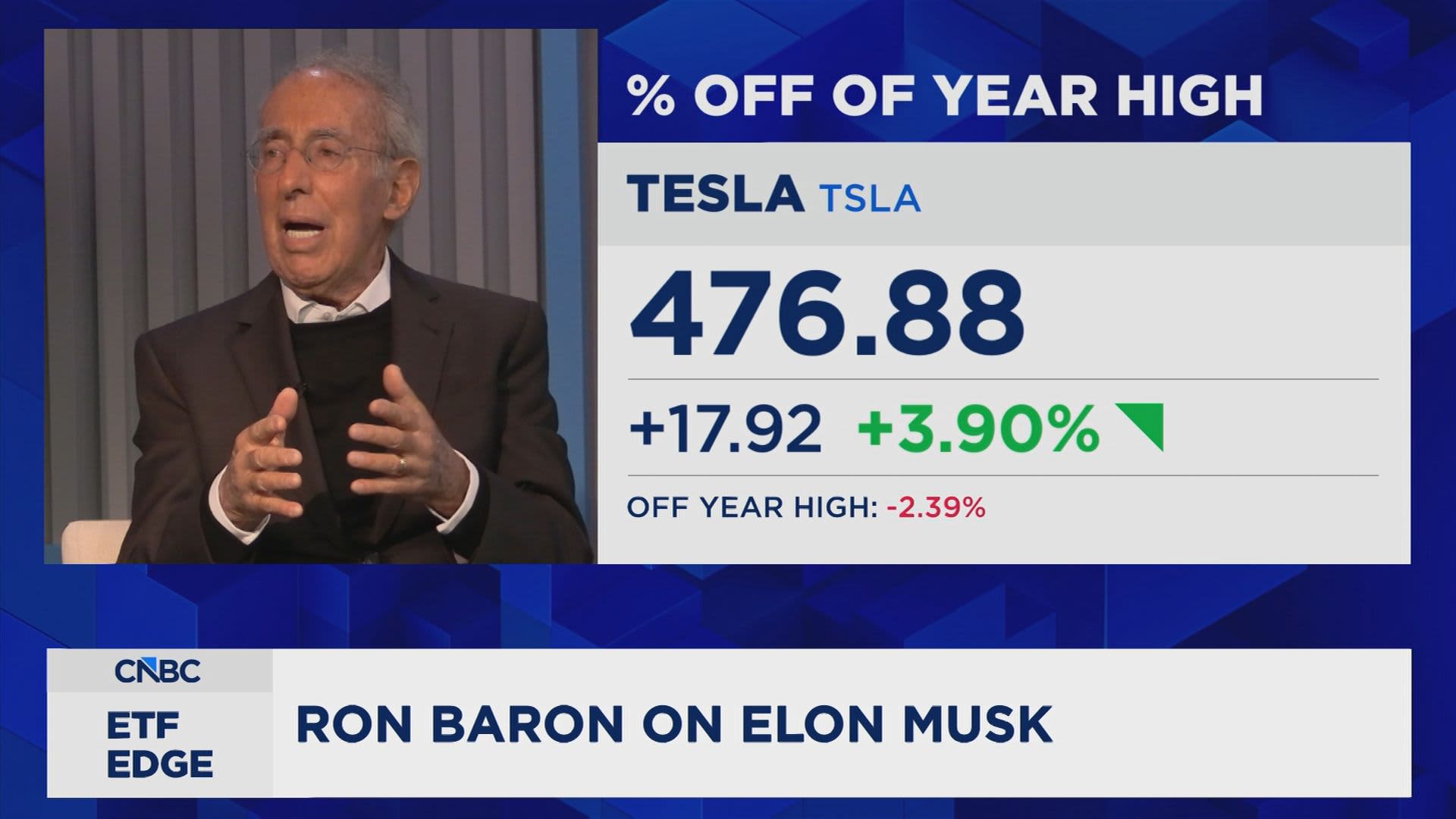
After its earnings report in late January, Tesla said AI-related capital expenditures were approximately $5 billion in 2024, out of $11.34 billion total. The company expects its AI spending to be flat year over year.
Tesla has been building out a “training cluster,” dubbed Cortex, at its Texas facility to be used for training models behind the company’s self-driving technology and humanoid robotics currently in development.
Nvidia won’t report results until later this month. And its capex figures will look very different since Nvidia is the one developing and supplying AI technology rather than buying it.
For Amazon, Google and Microsoft, AI spending is high, but it’s supposed to result in a big boon for their cloud businesses, which are major growth drivers. They’ve all said that clients are asking for more AI processing tools and that they plan to run bigger workloads in the cloud.
But in the most recent quarter, the cloud numbers were weaker than expected, with all three companies falling short of consensus estimates. A big reason was supply shortages.
“I predict those constraints really start to relax in the second half of 2025,” Amazon’s Jassy said.
At Microsoft, the AI side of the Azure cloud business came in better than management had anticipated, but outside of AI, Azure lagged behind internal projections because of disappointing sales to clients through partners, finance chief Amy Hood said on the earnings call. Microsoft is revamping its sales approach when it comes to balancing AI with more traditional IT processes, Hood said.
— CNBC’s Jordan Novet, Lora Kolodny, Kif Leswing, Jonathan Vanian, Ashley Capoot, Jennifer Elias and Annie Palmer contributed reporting
WATCH: Expect Amazon’s growth to decelerate in the near term